RismadarVoice Reporters, June 19, 2026
The Niger Delta Development Commission (NDDC) has announced plans to build the capacity of women across the Niger Delta region to participate actively in the Liquefied Petroleum Gas (LPG) value chain as part of efforts to promote economic empowerment and expand access to clean energy.
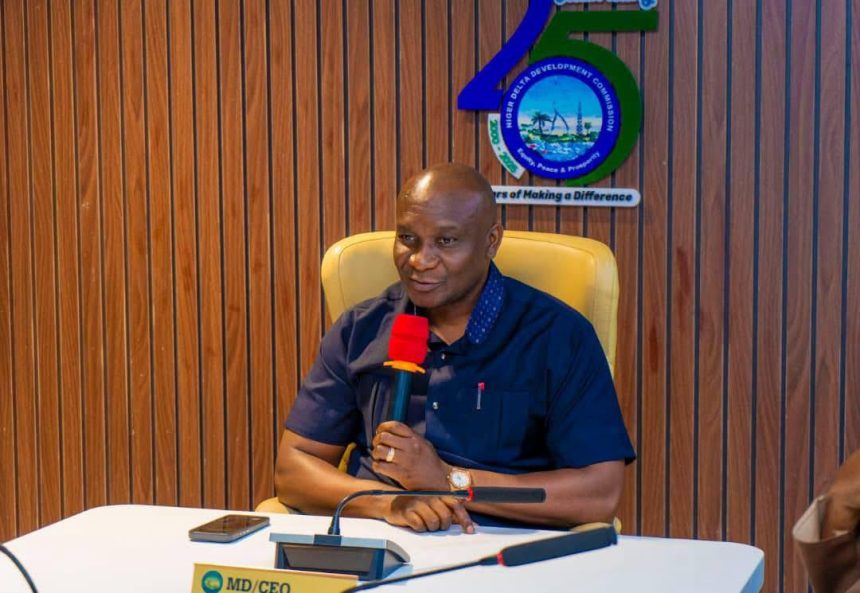
The Managing Director of the Commission, Dr Samuel Ogbuku, disclosed this during a meeting with officials of the Decade of Gas Initiative at the NDDC headquarters in Port Harcourt, Rivers State, on Thursday.
Ogbuku said the proposed initiative is aimed at creating sustainable economic opportunities for women while enhancing livelihoods and promoting clean energy adoption in communities across the region.
He noted that the Commission had already demonstrated its commitment to the growth of Nigeria’s gas sector through the training of 500 Niger Delta youths in Compressed Natural Gas (CNG) auto-gas conversion earlier in the year.
According to him, the programme was designed to equip young people with technical skills required to participate in the country’s evolving energy industry while creating employment opportunities.
The NDDC boss expressed optimism that the Federal Government’s Cooking Gas Penetration Programme would empower women economically and improve their ability to support their families.
He added that increased participation of women in the LPG value chain would strengthen household incomes and contribute to economic growth and social development across the Niger Delta.
Ogbuku also reaffirmed the Commission’s readiness to collaborate with the Decade of Gas Initiative to ensure the successful implementation of the programme.
“We are committed to partnering with stakeholders to bring the Decade of Gas LPG Grassroots Penetration Programme to reality and ensure that our people, especially women and youths, benefit from the opportunities within the gas value chain,” he said.

Speaking earlier, the Coordinating Director of the Decade of Gas Initiative, Mr Ed Ubong, disclosed that the programme aims to distribute one million gas cylinders annually as part of a broader target of five million cylinders by 2030.
He explained that the initiative seeks to accelerate the adoption of clean cooking energy, reduce dependence on traditional fuels and create economic opportunities within the gas sector.
Ubong noted that Nigeria’s economic prosperity is closely linked to the effective utilisation of its vast gas resources, stressing that increased gas production has already contributed to higher revenue generation.
He maintained that sustained investment in gas infrastructure and capacity development would unlock opportunities for industrialisation, job creation and economic diversification.
The Decade of Gas coordinator further revealed that the LPG Grassroots Penetration Programme had completed regional launches across the six geopolitical zones and the Federal Capital Territory, Abuja, including the distribution of filled gas cylinders to women and youths.
According to him, the next phase of the programme will be implemented on a state-by-state basis, beginning with Bayelsa State, before extending to other parts of the country.
Ubong also appealed for a strategic partnership with the NDDC, noting that the programme has secured the support of the World Bank and other development partners committed to promoting clean energy adoption and sustainable development.
He emphasised that expanding domestic gas utilisation would boost government revenue, create jobs, enhance energy security and improve the standard of living of Nigerians.
The meeting was attended by members of the Decade of Gas delegation, including Mr Opeyemi Balogun, Infrastructure and Demand Team Lead; Mrs Edu Antai, ICT and Media Team Lead; Ms Ugochukwu Natasha, Gas Supply Team Lead; and Ms Maeve Allanso, LPG Analyst.
Also present were the Executive Director, Projects, NDDC, Sir Victor Antai, and other members of the Commission’s management team.
The proposed collaboration is expected to deepen LPG penetration, promote clean energy adoption, expand participation in the gas value chain and create new economic opportunities for women and youths across the Niger Delta region.