RismadarVoice Reporters
September 12, 2026
Iraq has launched an investigation into drone attacks on Saudi Arabia’s strategic East-West oil pipeline after authorities confirmed that the drones were launched from Iraqi territory, while three border crossings with Iran were temporarily closed.
The Iraqi government ordered the closure of the Shalamcheh crossing in Basra province, al-Shib in Maysan province and Mandali in Diyala province, according to an Iraqi security source.
The closures followed the discovery of suspected drone launch sites inside Iraq and were reportedly intended, in part, to prevent those responsible for the attacks from escaping across the border into Iran.

Iraqi authorities also shut the al-Tayyib border area in Maysan province after drone launch platforms were reportedly discovered there. Security forces subsequently began a search operation in the area.
Prime Minister Ali al-Zaidi approved a request from Iran for a joint investigation into the discovery of the launch platforms, according to Sabah al-Numan, spokesman for the commander-in-chief of the Iraqi armed forces.
The Iraqi prime minister’s office had earlier said the attack originated from Maysan province and announced the dismissal of the military commander responsible for the area as investigations continued.
The government has not disclosed how many launch platforms were found or provided details on the type of equipment recovered.
NO GROUP CLAIMS RESPONSIBILITY
The attack on Saudi Arabia’s East-West oil pipeline occurred on Thursday, prompting Riyadh to temporarily suspend operations along the route the following day as a precautionary measure.
Saudi authorities said the drones had been launched from Iraq, where Iran maintains significant influence, including through armed groups operating in the country.

No group has formally claimed responsibility for the attack. The Islamic Resistance in Iraq, an umbrella organisation of Iran-backed armed factions, said the attack was “an honour that we do not claim.”
Saudi Arabia has previously accused Iran-linked groups operating in Iraq of attacks against its oil infrastructure.
US President Donald Trump has also suggested that Iran was “probably” behind the latest attack, although he did not provide evidence publicly to support the allegation.
THREAT TO SAUDI OIL EXPORTS
The disruption to the East-West pipeline represents a major setback for Saudi Arabia because the route provides a critical alternative to the Strait of Hormuz, a strategic waterway that has remained partially closed amid the ongoing confrontation between the United States and Iran.
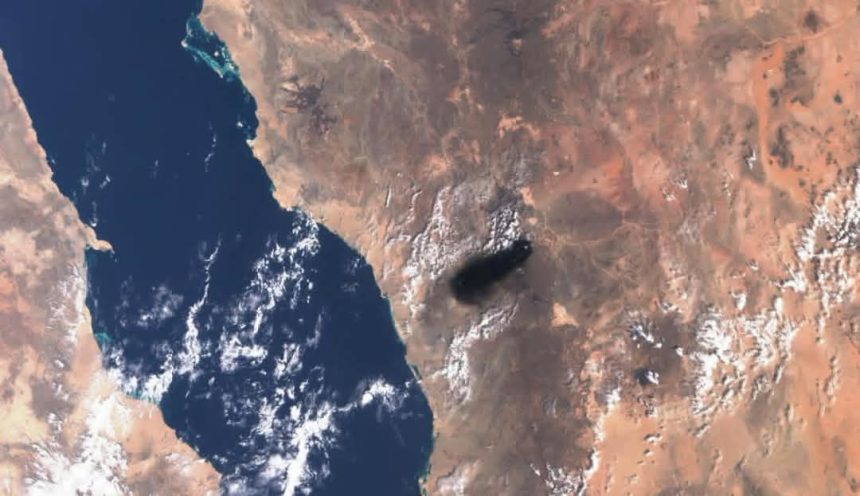
The pipeline transports Saudi crude from oil-producing areas in the east to terminals on the Red Sea, allowing the kingdom to export oil without relying entirely on the Strait of Hormuz.
With the pipeline temporarily suspended and the strait still severely disrupted, Saudi Arabia faces restrictions on its ability to move large volumes of crude to international markets.
The disruption could put additional upward pressure on global oil prices if Gulf exports decline further, while also increasing the strategic significance of the conflict around the region’s major energy routes.

The pipeline attack comes amid a wider escalation involving Yemen’s Iran-backed Houthi movement, which has reportedly taken control of Yemen’s Red Sea coastline after defeating forces loyal to the internationally recognised government.
Saudi Arabia has been a principal supporter of the Yemeni government, while the Houthis have warned that Saudi-linked shipping will not be allowed to pass through the Red Sea.
The developments have raised concerns over the security of critical oil and shipping routes across the Middle East, with any prolonged disruption potentially affecting global energy supplies and international trade.