RismadarVoice Reporters
September 28, 2026
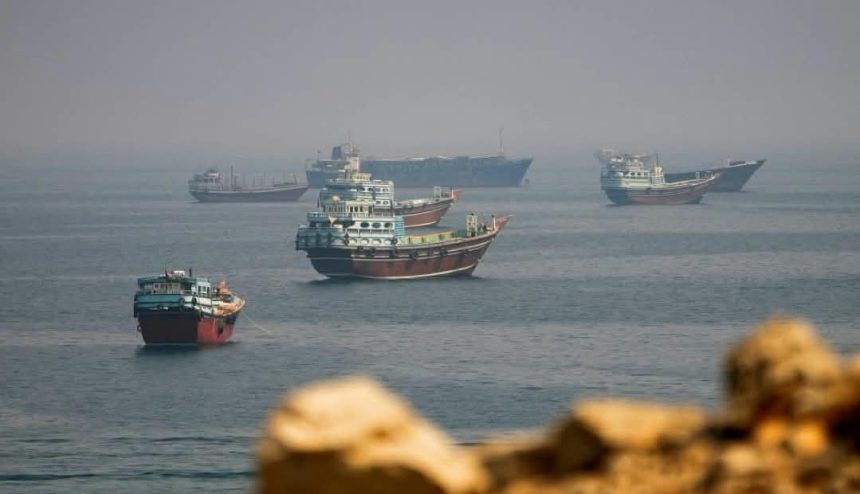
Iran has claimed that its attacks on vessels around the Strait of Hormuz have forced United States warships to move farther from the Iranian coast, as tensions continue despite increased oil movements through the strategic waterway.
Iranian authorities say recent missile and drone operations have placed pressure on US naval forces operating near the strait and the Gulf of Oman.
Reports in the United States said eight US Marines suffered smoke inhalation and possible traumatic brain injuries following an Iranian anti-ship cruise missile attack on September 14.
US Central Command had not publicly responded to the latest reports, although it previously said American vessels successfully avoided Iranian ballistic missile attacks earlier in September.
The Pentagon has listed 29 sailors and eight Marines among personnel wounded during the conflict, bringing the reported number of wounded US service members since fighting began on February 28 to 861. At least 19 deaths have also been recorded.
Iranian state-linked media have claimed that US warships recently withdrew from positions closer to the Iranian port of Chabahar and the entrance to the Gulf of Oman and moved farther into the Arabian Sea.

Iran’s Supreme Leader, Mojtaba Khamenei, also said on Monday that US forces had refrained from advancing farther because of attacks by Iranian forces operating around the Strait of Hormuz.
Washington, however, continues to maintain restrictions on Iran’s southern ports and has rejected Tehran’s latest proposal concerning the reopening of the strait.
Despite the continuing military tensions, the movement of oil through Hormuz has increased significantly in recent weeks.
US Energy Secretary Chris Wright said on Sunday that nearly 13 million barrels of crude oil were moving through the strait each day, while Treasury Secretary Scott Bessent estimated flows at between 15 million and 22 million barrels per day.
Before the conflict, approximately 20 million barrels per day passed through the waterway.
Preliminary shipping data indicated that crude exports through Hormuz were expected to average about 7.4 million barrels per day in September.
Regional exports from countries including Saudi Arabia, the United Arab Emirates, Iraq, Oman, Qatar, Kuwait and Iran were also estimated to have recovered to about 12.8 million barrels per day during September.
Iran’s Islamic Revolutionary Guard Corps maintains that vessels must coordinate with Iranian authorities before travelling through the strait.
Meanwhile, diplomatic efforts to contain the confrontation are continuing.

Following US President Donald Trump’s rejection of conditions proposed by Tehran for reopening the Strait of Hormuz, mediators were expected to facilitate further exchanges between the two countries.
Iran has ruled out direct negotiations for now and wants previous understandings reached with Washington and Oman to form the basis of any new agreement addressing the blockade, the Strait of Hormuz and its nuclear programme.
Analysts say Tehran could intensify pressure on maritime traffic if diplomatic efforts fail, although a significant attack causing large numbers of US casualties could trigger a broader escalation.
For now, increased oil movements through Hormuz are continuing alongside military tensions and indirect diplomatic efforts aimed at preventing another major escalation in the conflict.