
RismadarVoice Reporters
September 16, 2026
The Independent National Electoral Commission has intensified preparations aimed at increasing the participation of persons with disabilities in Nigeria’s 2027 general elections.
The electoral body has commenced strategic engagements with the Joint National Association of Persons with Disabilities, organisations representing persons with disabilities and leaders of various disability clusters as part of efforts to improve voter sensitisation, mobilisation and accessibility.
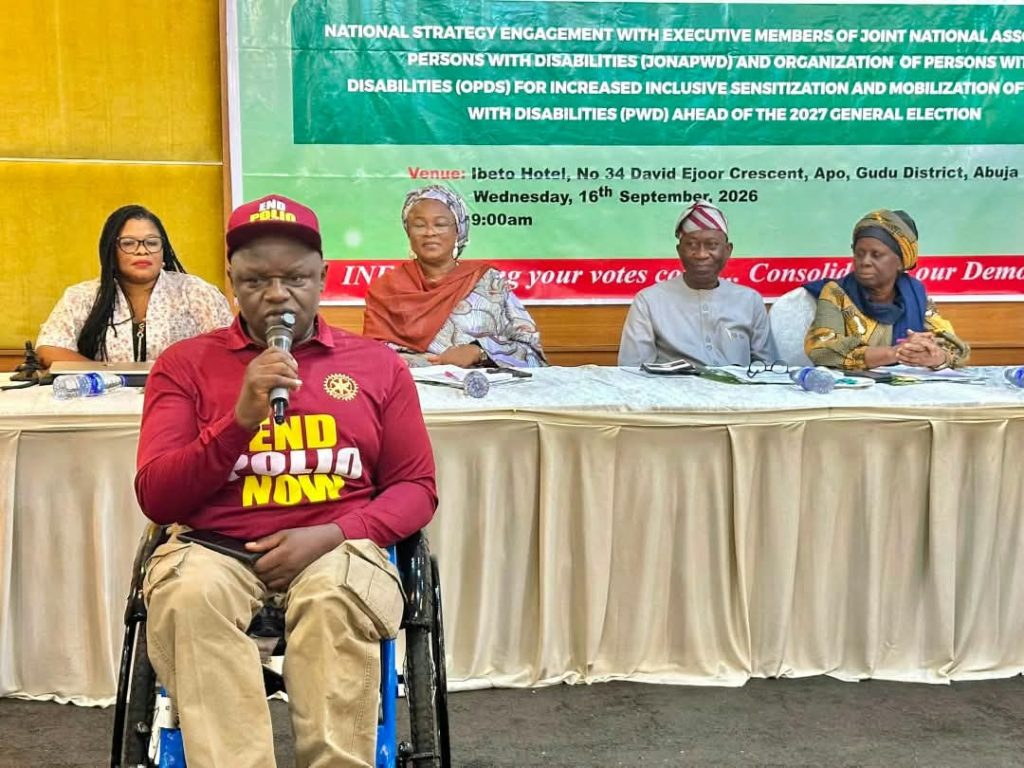
The initiative is expected to ensure that eligible voters with disabilities receive adequate information about the electoral process and are able to participate more effectively before and during the elections.
INEC has previously identified mobilisation of persons with disabilities and sensitisation of election officials to their needs as areas requiring attention in improving Nigeria’s electoral process.
Representing INEC Chairman, Prof. Joash Amupitan, SAN, at the engagement, the commission’s Acting Chairman, Prof. Rhoda Gumus, said preparations for the 2027 elections made increased engagement with the disability community important.
Gumus said the commission remained committed to an electoral system that provides eligible Nigerians with opportunities to participate irrespective of disability.
INEC PUSHES INCLUSIVE ELECTORAL PROCESS
According to the commission, participation by persons with disabilities is supported by existing legal and policy provisions designed to improve accessibility within Nigeria’s electoral system.
These include provisions of the Electoral Act and the Discrimination Against Persons with Disabilities (Prohibition) Act, as well as INEC’s framework covering access and participation of persons with disabilities in elections.

INEC said improving participation would require more than assisting at polling units, stressing the importance of ensuring that information reaches eligible voters in accessible formats before election day.
Gumus consequently called for greater use of disability-specific communication methods, community organisations, radio, social media and other assistive formats in voter education.
The approach is expected to improve awareness about voter registration, Permanent Voter Card collection, voting procedures and accessibility arrangements available to persons with disabilities.
COMMISSION PROVIDES PWD DATA
INEC said available data compiled before the introduction of its Automated Fingerprint Identification System recorded 137,487 persons with disabilities.
According to figures presented during the engagement, the number included 13,080 persons with visual impairments and 9,299 with hearing impairments.

Another 30,561 were recorded as persons with albinism, while 19,430 were classified as having physical impairments.
The commission said 54,941 people were recorded under other disability categories.
INEC’s more recent voter-registration exercises have also continued to capture persons with disabilities. The commission reported substantial PWD participation during its Continuous Voter Registration exercise, reflecting its continuing effort to incorporate disability data into electoral planning.
JONAPWD, OTHER GROUPS GIVEN MOBILISATION ROLE
The electoral body urged JONAPWD and other organisations representing persons with disabilities to take an active role in the sensitisation campaign.
Gumus said the organisations were strategically positioned to reach members of individual disability clusters and provide accurate electoral information.
The groups are expected to assist in educating their members about registration requirements, PVC collection, voting procedures and measures introduced to make polling locations more accessible.
The commission said effective mobilisation would require cooperation between election administrators, disability organisations, community groups and other stakeholders.

INEC also wants the engagement to provide an opportunity for persons with disabilities to identify practical difficulties they experience while participating in elections.
The feedback could subsequently help electoral officials determine measures required before, during and after the 2027 polls.
ACCESSIBILITY TOOLS FOR VOTERS
INEC’s Director of Gender and Inclusivity, Mrs Lakunuya Dorothy Bello, also highlighted measures introduced to assist voters with disabilities.
Among them are Braille ballot guides designed to assist visually impaired voters and magnifying glasses for voters who require assistance reading ballot materials.
Other measures include the EC30 PWD form and sign-language interpretation during collation activities.
The commission said these interventions form part of continuing efforts to reduce obstacles that could prevent eligible voters with disabilities from participating independently and meaningfully in elections.
Accessibility has increasingly become an important aspect of INEC’s electoral planning.
Following its review of the 2023 general election, the commission identified targeted mobilisation of persons with disabilities and greater sensitisation of election officials as measures requiring attention.

PREPARATIONS FOR 2027 INTENSIFY
The engagement comes as preparations for Nigeria’s 2027 general elections continue.
INEC has been reviewing several aspects of its electoral regulations and guidelines, including measures aimed at improving participation by groups that have historically been underrepresented in the political and electoral process.
The commission’s ongoing review of political-party regulations has also placed attention on measurable participation by women, young people and persons with disabilities within party structures.
INEC said collaboration with disability organisations would help identify remaining barriers, evaluate approaches that have worked in previous elections and develop practical measures ahead of the polls.

The commission maintained that eligible citizens with disabilities should have access to electoral information and facilities necessary to exercise their voting rights.
The latest engagement is therefore expected to continue as preparations advance, with disability organisations playing a central role in disseminating electoral information to their members and communities ahead of the 2027 general elections.