RismadarVoice Reporters, July 21, 2026
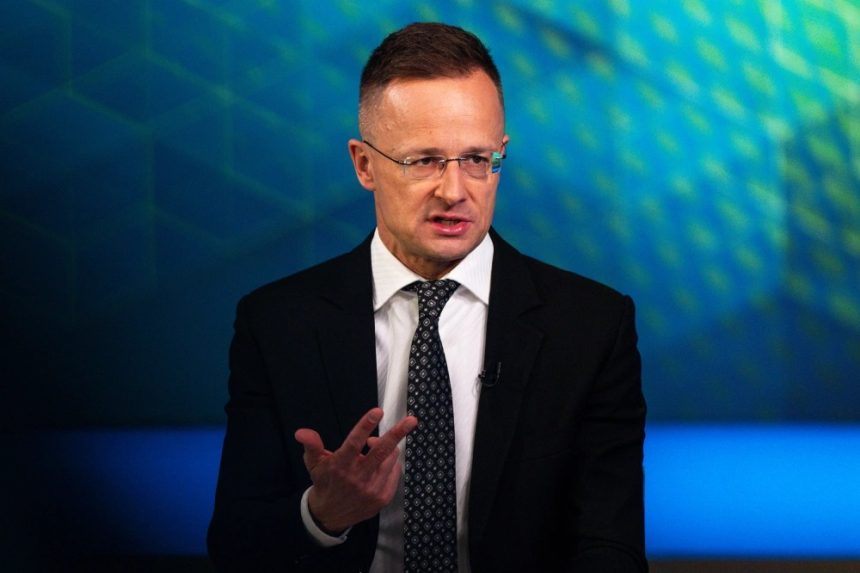
Hungary’s government has launched an investigation into a major investment by Chinese electric vehicle giant BYD following the appointment of former Foreign Minister Péter Szijjártó to a senior executive role at the company.
The move comes days after Szijjártó resigned from Parliament to join BYD, sparking widespread criticism and allegations of a potential conflict of interest stemming from his prior role in securing government support for the automaker while in office.
Prime Minister Péter Magyar announced the investigation on Monday, telling lawmakers that Szijjártó had facilitated BYD’s expansion in Hungary through extensive government backing, including public funding, diplomatic assistance and state infrastructure projects.

According to Magyar, authorities will examine every decision, negotiation and state commitment linked to BYD’s investment in Hungary during Szijjártó’s tenure as foreign minister.
The probe will also review government incentives granted to multinational companies under the previous administration of former Prime Minister Viktor Orbán. These include subsidies, tax incentives, environmental approvals, permits and publicly financed infrastructure projects.
Magyar said investigators would determine who approved the agreements, whether professional concerns were overlooked and the long-term impact of the investments on taxpayers, workers, local communities and the environment.
Neither Szijjártó nor BYD has publicly responded to the allegations. However, the former minister described his appointment at BYD as a prestigious opportunity to work with one of the automotive industry’s leading electric vehicle manufacturers.
During his years in government, Szijjártó played a key role in attracting Chinese investments into Hungary. In 2023, he announced BYD’s decision to establish its first European manufacturing plant in the country. This move enabled the company to produce vehicles within the European Union rather than face tariffs imposed on Chinese-made electric vehicles.

Two years later, he also confirmed that BYD would establish its European headquarters and a research and development centre in Budapest, supported by approximately 20 billion forints (about $63.7 million) in government funding.
The investments formed part of Hungary’s broader strategy to become a major hub for lithium-ion battery and electric vehicle production by attracting Chinese manufacturers.
However, the policy has faced strong opposition from environmental groups, local communities and political critics, who argue that the rapid expansion of battery manufacturing could place additional pressure on water resources, increase environmental risks and deepen Hungary’s economic dependence on China.
Szijjártó’s political career has also drawn scrutiny over his close ties with Russia. Despite Moscow’s invasion of Ukraine in 2022, he maintained regular diplomatic engagements with Russian Foreign Minister Sergey Lavrov and continued negotiating energy agreements involving Russian oil and gas supplies.
During Hungary’s 2026 election campaign, reports alleged that Szijjártó communicated with Lavrov during European Union foreign ministers’ meetings, providing updates on discussions. He rejected claims of wrongdoing but acknowledged speaking with the Russian minister before and after EU meetings to discuss agendas and outcomes.
Prime Minister Magyar also disclosed last week that authorities had begun examining Szijjártó’s relationship with the Russian government as part of broader ongoing investigations.