

RismadarVoice Reporters
September 25, 2026
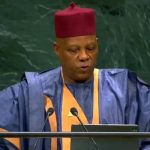
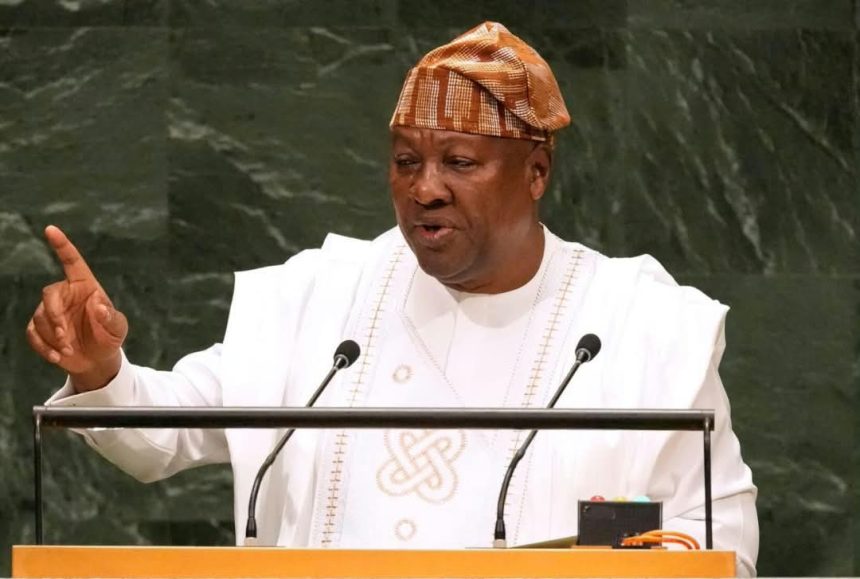
Ghanaian President John Dramani Mahama has used his address to the 81st United Nations General Assembly in New York to reaffirm his Pan-African convictions while calling for global justice, equality and reforms to the international system.
Mahama opened his address by presenting himself beyond his position as President, reflecting on the history, people and values he represents. Drawing on Ghana’s Pan-African and anti-colonial heritage, he referenced the legacies of African leaders including Kwame Nkrumah, Haile Selassie and Nelson Mandela.
From that historical foundation, Mahama turned to one of the central themes of his address — reparatory justice for Africans and people of African descent.
He recalled his pledge at the previous UN General Assembly to campaign for international recognition of the transatlantic trafficking and racialised chattel enslavement of Africans as the gravest crime against humanity in human history.
That campaign recorded a major development on March 25, 2026, when the UN General Assembly adopted Resolution 80/250, describing the trafficking of enslaved Africans and racialised chattel slavery as the “gravest crime against humanity.” The resolution received 123 votes in favour, with Ghana working alongside the African Union and CARICOM to advance the initiative.

Building on that development, Mahama argued that recognition should be followed by meaningful steps towards reparatory justice. He maintained that the campaign was not intended to create division or seek vengeance but to promote acknowledgement, justice and healing.
The Ghanaian leader then broadened his message beyond the historical injustices suffered by Africans, stressing the need for equality and human dignity in the contemporary international system.
He argued that the United Nations must remain anchored in the principle that humanity shares a common destiny, regardless of race, nationality, religion or place of birth.
Mahama also linked that principle of equality to Africa’s representation in global decision-making, calling for an international system that gives developing countries, particularly African nations, a stronger voice in institutions that shape global affairs.
He said Ghana would continue to champion African integration, peace, economic development and a more representative international order as the country prepares to assume the chairmanship of the African Union in 2027.
For Mahama, the push for historical justice and the campaign for greater African representation are part of the same broader objective — ensuring that Africa’s past is acknowledged while the continent is given a meaningful role in shaping its future.