RismadarVoice Reporters
September 30, 2026
The Federal Government of Nigeria has ruled out a return to the petrol subsidy regime, saying the economic reforms introduced by President Bola Tinubu’s administration will be sustained.
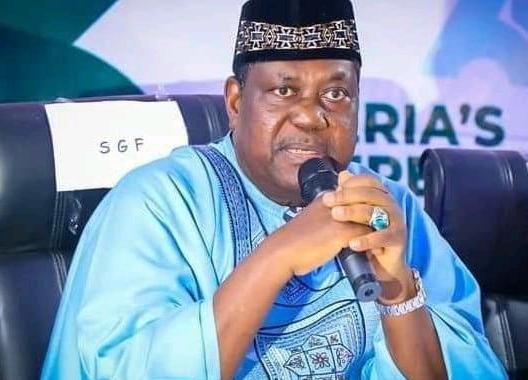
Secretary to the Government of the Federation, Senator George Akume, stated this on Wednesday in Abuja during the 66th Independence Anniversary Lecture.
Akume said the administration took difficult economic decisions after assuming office in 2023, including the removal of the petrol subsidy, unification of the foreign exchange market and other fiscal reforms.
He maintained that the measures were necessary to address economic challenges facing the country and restore stability.
“We will not return to the ruinous petroleum subsidy regime of the past,” Akume said.
The SGF said Nigeria’s real Gross Domestic Product grew by 4.2 per cent in the first half of 2026, adding that the government’s focus was to ensure economic growth translated into jobs and improved incomes for Nigerians.
He also said more than 120,000 vehicles had been converted to Compressed Natural Gas, with over 400 conversion centres and 90 fuelling stations established nationwide.

According to Akume, increased adoption of CNG is intended to reduce transportation and fuel costs following the removal of the petrol subsidy.
The SGF also highlighted government interventions in infrastructure, power, agriculture, education, healthcare, housing and security.
He said ongoing projects, including the Lagos-Calabar Coastal Highway, Abuja-Kano highway and East-West Road, alongside rail modernisation and port reforms, were intended to improve connectivity and economic activity.
On agriculture, Akume said a $500 million credit had been approved for the Nigeria Sustainable Agricultural Value-Chains for Growth project to support agricultural productivity, value chains and food security.
Speaking on education and youth development, he said the government was expanding access to student loans and strengthening technical and vocational education.
Akume also said the government was investing in primary healthcare facilities, social protection programmes and security infrastructure.

Minister of Information and National Orientation, Mohammed Idris, who also spoke at the event, said Nigeria’s economy recorded 4.43 per cent real GDP growth in the second quarter of 2026.
Official figures show the Q2 growth rate increased from 4.23 per cent recorded in the corresponding quarter of 2025.
Idris acknowledged that the economic reforms had imposed difficulties on Nigerians but said the government expected the measures to support economic stability, investment and growth.
He also called for factual and responsible public discourse as Nigeria moves towards another electoral cycle, stressing that political differences should not undermine national unity.