RismadarVoice Reporters, May 11, 2026
The Federal Government has declared admissions conducted outside the Central Admissions Processing System (CAPS) illegal, warning tertiary institutions that violators risk sanctions, including possible suspension of operating licences.
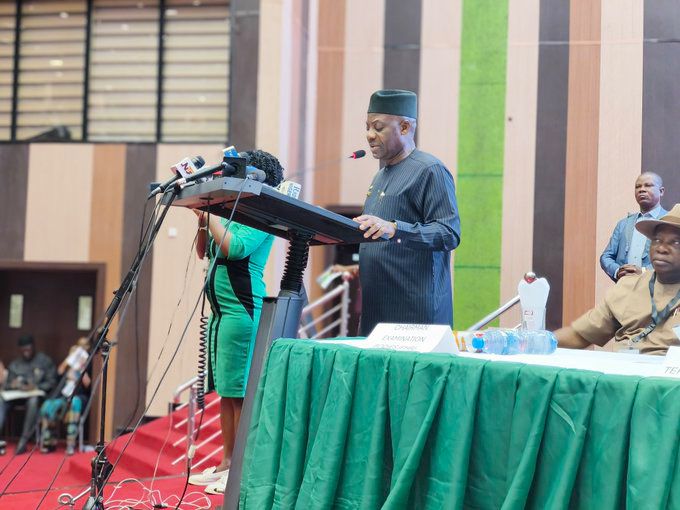
Speaking at the 2026 Policy Meeting on Admissions to Tertiary Institutions in Abuja on Monday, Minister of Education Maruf Alausa said the government would no longer tolerate parallel admission processes outside the platform managed by the Joint Admissions and Matriculation Board.
According to the minister, all admissions into universities, polytechnics, and colleges of education must be processed through CAPS to ensure transparency, fairness, and accountability.

“Admissions conducted outside this framework are illegal and will not be recognised,” Alausa said.
He warned that institutions bypassing the system would face regulatory action.
“The era in which institutions operated parallel admission systems, often to the detriment of deserving candidates, must come to an end,” he stated.
Alausa stressed that the government would enforce compliance strictly, adding that he had resisted attempts to legitimise irregular admissions.
“Any institution found to have conducted admissions outside the CAPS will be held accountable, and appropriate sanctions shall be applied without hesitation,” he said.
He noted that both public and private institutions could face severe penalties, including suspension of licences where necessary.
The minister explained that the policy was not aimed at punishing institutions but at restoring credibility to Nigeria’s tertiary education system.
On admission age, Alausa confirmed that the Federal Government had retained 16 years as the minimum age for entry into tertiary institutions after consultations and policy reviews.
He, however, said exceptionally gifted candidates would be considered only under clearly defined guidelines.
Alausa also commended JAMB for measures introduced to support persons with disabilities, including waivers for application fees, describing the initiative as a commitment to equal opportunity.
The minister highlighted ongoing reforms in the education sector, including the implementation of the Nigerian Education Loan Fund to ease financial barriers for students.
He said the interest-free loan scheme covering tuition and upkeep was designed to expand access to higher education and support national development.
Alausa further called for greater transparency in tertiary institutions, directing public universities, polytechnics, and colleges of education to publish operational data such as enrolment figures and financial allocations.
He also reiterated the government’s commitment to digitalisation in education through computer-based testing and integration of emerging technologies into learning.
Speaking on industrial harmony, the minister described the 2025 agreement with the Academic Staff Union of Universities as a breakthrough that would improve welfare, funding, and stability in public universities.

He warned against examination malpractice, saying stricter verification systems were being introduced to safeguard the integrity of academic certificates.
Alausa urged stakeholders to focus on implementation rather than policy declarations, stressing that reforms would only succeed through effective execution.
“The decisions we take here will have far-reaching implications for millions of young Nigerians,” he said.