


RismadarVoice Reporters, May 25, 2026
Nigeria has been placed on its highest Ebola alert in years, with health authorities warning that the country faces a significant risk of importing the deadly virus as outbreaks continue to ravage the Democratic Republic of Congo and Uganda, claiming at least 177 lives from approximately 700 suspected cases.
The Nigeria Centre for Disease Control and Prevention raised the alarm at the weekend, with its Director-General, Dr Jide Idris, confirming that while no case had been recorded on Nigerian soil, a comprehensive emergency response framework had been activated nationwide to intercept any possible importation of the disease.
The alert followed the World Health Organisation’s declaration of a Public Health Emergency of International Concern over the worsening regional outbreak a designation that signals the gravity of the threat to neighbouring countries.

According to the NCDC’s dynamic risk assessment, several factors elevate Nigeria’s vulnerability, including heavy international air and land travel, porous border crossings, large-scale population movement, and the likelihood of delayed diagnosis given that early Ebola symptoms closely resemble those of malaria and Lassa fever two diseases already endemic in Nigeria.
In response, the National Emergency Operations Centre has been switched to full alert mode, while the National Incident Management System has been activated to coordinate a rapid nationwide response. Epidemiologists and Rapid Response Teams have been placed on standby for immediate deployment to any state where a suspected case surfaces.
Surveillance has been intensified at airports, land borders, seaports and healthcare facilities across the country, with officials tracking disease rumours and unusual illness patterns for early detection signals. States have also been directed to designate isolation and treatment centres, review bed capacity, reinforce ambulance and referral systems, and stock critical emergency supplies.
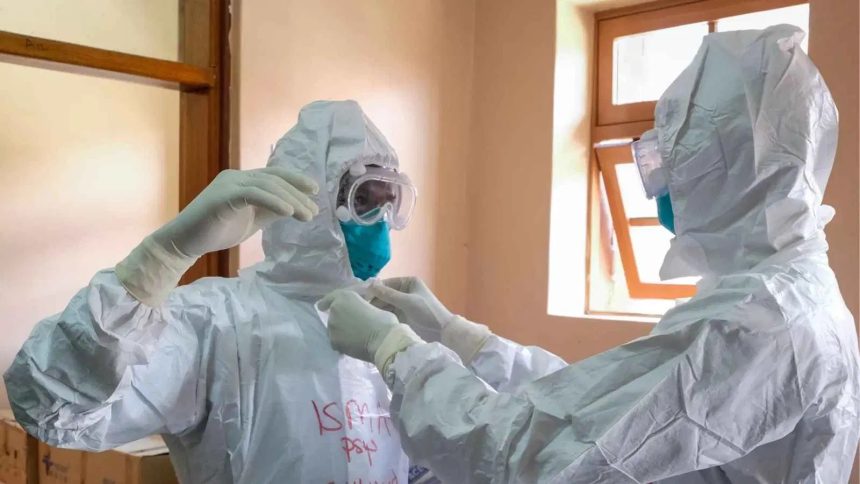
To protect frontline workers, Ebola Infection Prevention and Control readiness tools and checklists have been distributed to hospitals nationwide, while healthcare staff are undergoing refresher training on case identification, triage procedures and the proper use of protective equipment.
Laboratory networks have equally been placed on heightened alert, with testing capabilities already operational in states hosting international entry points, and essential response commodities including personal protective equipment, body bags and laboratory consumables being strategically prepositioned across the country.
Amid a surge of misinformation on social media, the NCDC has launched targeted campaigns to counter false narratives, distributing fact-based materials on Ebola transmission and prevention to the public.
Nigerians have been urged to maintain regular hand hygiene, avoid contact with the bodily fluids of sick individuals, and refrain from sharing unverified health information. Travellers returning from affected countries are advised to monitor themselves for symptoms including fever, weakness, vomiting and unexplained bleeding for 21 days and report any concerns immediately to health authorities.
In Nigeria’s commercial capital, the state government moved swiftly to shore up its own defences, with Commissioner for Health Prof. Akin Abayomi confirming that no suspected or confirmed Ebola case had been recorded in Lagos.
Abayomi disclosed that Lagos had activated its “Biosecurity Bio-shield” framework a robust outbreak response architecture built on lessons from the 2014 Ebola crisis and further refined during the COVID-19 pandemic. The state’s Emergency Operations Centre is operating around the clock, with epidemiologists monitoring disease signals across all communities.
All incoming flights from East and Central Africa are now subject to intensified health screening, in collaboration with federal agencies including the NCDC, the Federal Airports Authority of Nigeria and the Nigeria Institute of Medical Research. Surveillance has also been tightened at seaports and land border crossings.

The Lagos State Infectious Disease Hospital has been confirmed as fully operational, with isolation wards, intensive care units and a Biosafety Level-3 Laboratory in Yaba on enhanced alert for rapid diagnosis of high-risk pathogens.
Residents experiencing symptoms and who have had contact with travellers from affected regions have been advised to call emergency lines 767 or 112, or reach the State Epidemiologist directly.
Nigeria’s health authorities were quick to remind the public that Ebola is not airborne and that the country successfully contained a previous importation of the virus in 2014 an achievement that earned it global recognition. Officials say they remain committed to preventing history from repeating itself under far more challenging regional circumstances.