RismadarVoice Reporters
October 21, 2026
The Nigerian Senate has called on the Federal Government to enforce compulsory health screening at all international airports, seaports and designated land borders following the confirmation of an imported Ebola case in Abuja.
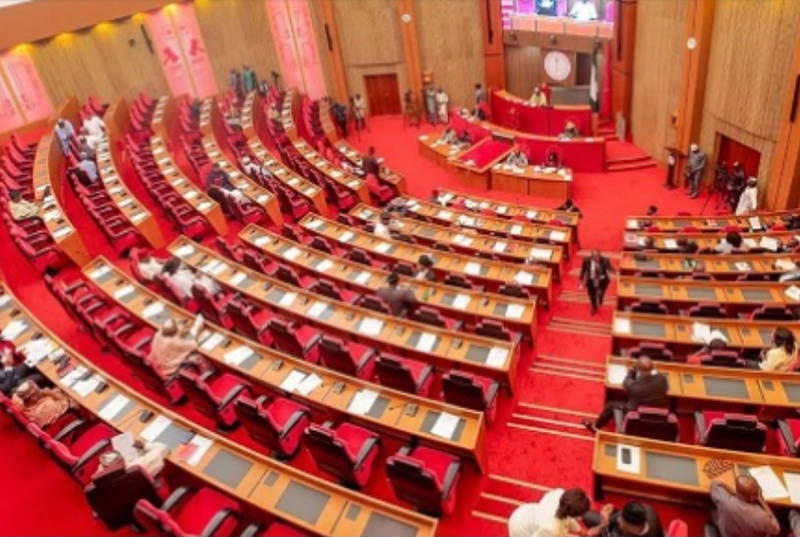
The resolution was adopted during plenary on Wednesday, October 21, following a motion sponsored by Senator Francis Adedayo Faduyile, representing Ondo South Senatorial District.
The motion, titled Urgent Need to Enforce Mandatory Health Screening at All International Airports and Other Entry Points to Prevent the Importation of Ebola and Other Epidemic-Prone Diseases into Nigeria, highlighted concerns about the spread of the deadly virus across African countries.

The Senate urged the Federal Ministry of Health and Social Welfare, the Nigeria Centre for Disease Control and Prevention (NCDC) and Port Health Services to ensure that all arriving international passengers undergo health screening, regardless of nationality or country of departure.
The proposed measures include mandatory health declaration forms, temperature checks and assessments for symptoms associated with Ebola and other infectious diseases.
Lawmakers also recommended enhanced screening for travellers who had visited or transited through affected countries within the preceding 21 days.
The upper chamber further called for exit screening during declared public health emergencies to reduce the risk of cross-border transmission.
Presenting the motion, Faduyile warned that the outbreak of the Bundibugyo strain of Ebola, which originated in the Democratic Republic of Congo, posed significant risks to Nigeria’s healthcare system.
He expressed concern over inadequate personnel, equipment and surveillance arrangements at some of the country’s international entry points.
The Senate consequently urged relevant government agencies to provide trained Port Health officers, thermal scanners, protective equipment and functional isolation facilities.

It also called for the preparation of isolation and treatment centres across the 36 states and the Federal Capital Territory.
On funding, the lawmakers urged the Federal Government to release emergency resources from the Service Wide Vote to strengthen disease surveillance, emergency preparedness and containment operations.
The Senate also recommended reviewing and replacing the Quarantine Act of 1926 with modern public health legislation consistent with the International Health Regulations.
However, the chamber rejected a proposal requiring its relevant committees to conduct physical inspections of major entry points and submit their findings within four weeks.
Senate President Godswill Akpabio opposed the proposed visits, citing concerns about possible exposure to infection.
The Committee on Legislative Compliance was instead directed to monitor implementation of the adopted resolutions.
The development follows Nigeria’s confirmation of an Ebola infection involving a woman with recent international travel history who is receiving medical care in isolation in the Federal Capital Territory.
Health authorities have identified 44 people who may have been exposed and commenced contact tracing and monitoring.
Officials have stressed that the identified contacts are not equivalent to confirmed infections.
The Senate maintained that strengthening border surveillance, improving emergency healthcare capacity and ensuring adequate funding would help prevent further transmission.
Lawmakers also urged Nigerians to observe appropriate hygiene practices and cooperate with public health authorities while avoiding panic and the circulation of unverified information.