RismadarVoice Reporters, May 30, 2026
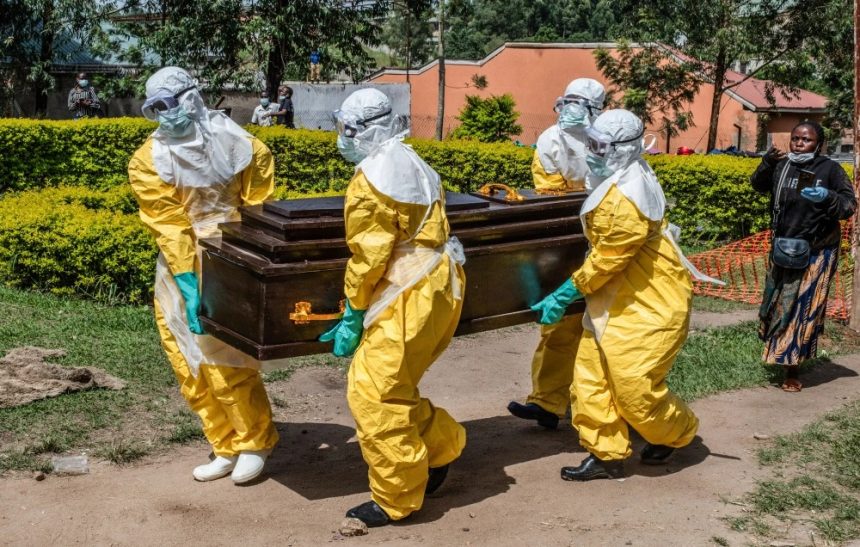
A fast-moving Ebola outbreak in eastern Democratic Republic of the Congo has raised fresh global health concerns after nearly 1,000 cases and hundreds of deaths were reported, according to the World Health Organisation (WHO).
Health authorities say the outbreak, driven by the rare Bundibugyo strain of the Ebola virus, is spreading rapidly across a remote but densely populated region where ongoing insecurity and population movement are complicating containment efforts.

The WHO declared a public health emergency in mid-May, warning that the “speed and scale” of infections could increase the risk of cross-border transmission if urgent containment measures are not sustained.
Ebola is a highly infectious viral disease that spreads through direct contact with infected blood, bodily fluids, contaminated surfaces, and through unsafe handling of victims’ remains. Unlike airborne respiratory illnesses, it does not spread through casual air contact.
Medical experts say the virus attacks the body’s blood vessels and organs, leading to severe internal damage and haemorrhagic fever. Early symptoms typically include fever, fatigue, sore throat, headaches, and muscle pain before progressing to more severe complications.
The current outbreak is linked to the Bundibugyo species of Ebola, first identified in western Uganda less than two decades ago and considered one of the less common strains of the virus. Health officials note that this is only the third recorded outbreak caused by this variant.
While research into vaccines and treatments for Bundibugyo Ebola is ongoing, the WHO says there is currently no approved vaccine widely available for this specific strain, though experimental candidates exist.
The outbreak has also triggered international debate over response strategies, including decisions by some governments to relocate exposed citizens for quarantine in third countries. A recent U.S. plan to house exposed individuals in Kenya faced legal challenges, with a Kenyan court temporarily suspending the arrangement.

Health officials in the United States have also indicated that any citizens requiring advanced Ebola treatment would likely be transferred to European facilities rather than returned to the U.S., highlighting the complexity of managing high-risk infectious disease cases across borders.
Experts warn that conflict, mining activity, and high mobility in eastern Congo continue to fuel conditions that make containment difficult, recalling the scale of the 2014 West African Ebola epidemic, which killed more than 11,000 people.
As global health agencies intensify response efforts, attention remains focused on surveillance, rapid isolation of cases, and community awareness to prevent further spread of the virus.