RismadarVoice Reporters, April 24, 2026
East African nations have opened discussions to establish a joint oil refinery at Tanzania’s Tanga port, in a move aimed at transforming the region’s energy security and reducing dependence on imported refined fuels.
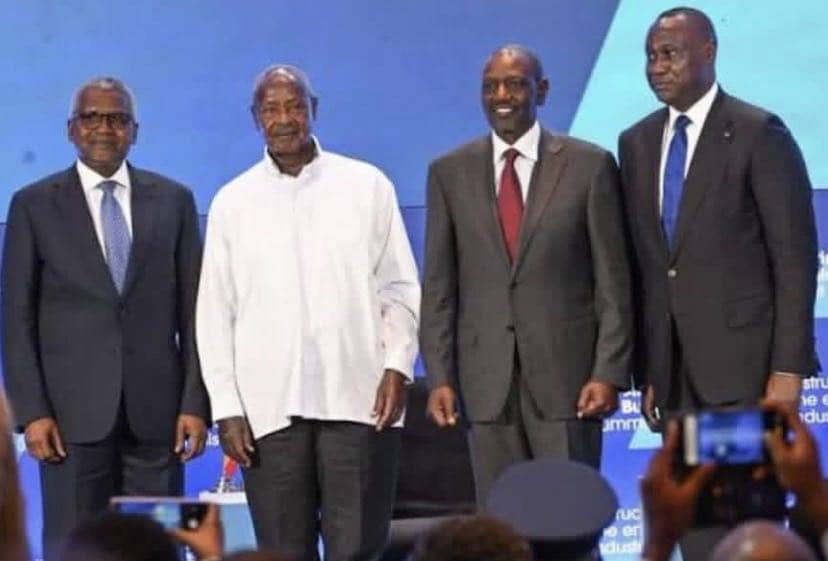
Speaking on Thursday at an infrastructure financing conference in Nairobi, William Ruto said the proposed facility would be modelled after Nigeria’s 650,000-barrel-per-day Dangote Refinery currently Africa’s largest.
The refinery is expected to process crude oil from the Democratic Republic of the Congo, Kenya, South Sudan, and Uganda.
Ruto said the initiative would mark a strategic shift for the region, which currently relies almost entirely on imports of refined petroleum products from the Middle East. “This is about energy independence and long-term price stability,” he noted.
Africa’s richest man, Aliko Dangote, signalled strong interest in the project, pledging to lead construction if at least “three or four governments” commit to backing the venture. Dangote indicated the refinery could be delivered within four to five years under a coordinated regional framework.
Beyond refining, Dangote outlined broader industrial ambitions across the continent. He announced plans to establish 20 fertiliser blending plants across Africa by 2028, positioning the move as part of a wider push to strengthen agricultural productivity and reduce import dependence. He also encouraged African investors to participate in the planned public listing of his Nigerian refinery, promising dollar-denominated dividends. “I will be paying dividends in dollars,” he said, underscoring the project’s appeal to investors seeking foreign currency returns.
The proposed Tanga refinery comes at a pivotal moment for East Africa’s oil sector. Uganda is preparing to commence commercial oil production later this year and is separately advancing a 60,000-barrel-per-day refinery project in partnership with UAE-based Alpha MBM Investments.
Analysts say a regional refinery could help insulate East African economies from global supply disruptions and volatile fuel prices, such as those triggered by recent tensions involving Iran. By refining crude locally, governments aim to stabilise domestic markets while retaining more value within the region.
If realised, the Tanga refinery would represent one of the most ambitious cross-border energy collaborations in Africa, potentially reshaping trade flows and industrial development across East Africa.