



RismadarVoice Reporters
October 28, 2026
The Nigeria Customs Service (NCS) and the World Customs Organisation (WCO) have renewed efforts to strengthen collaboration with the Economic and Financial Crimes Commission (EFCC) in combating money laundering and terrorism financing in Nigeria.
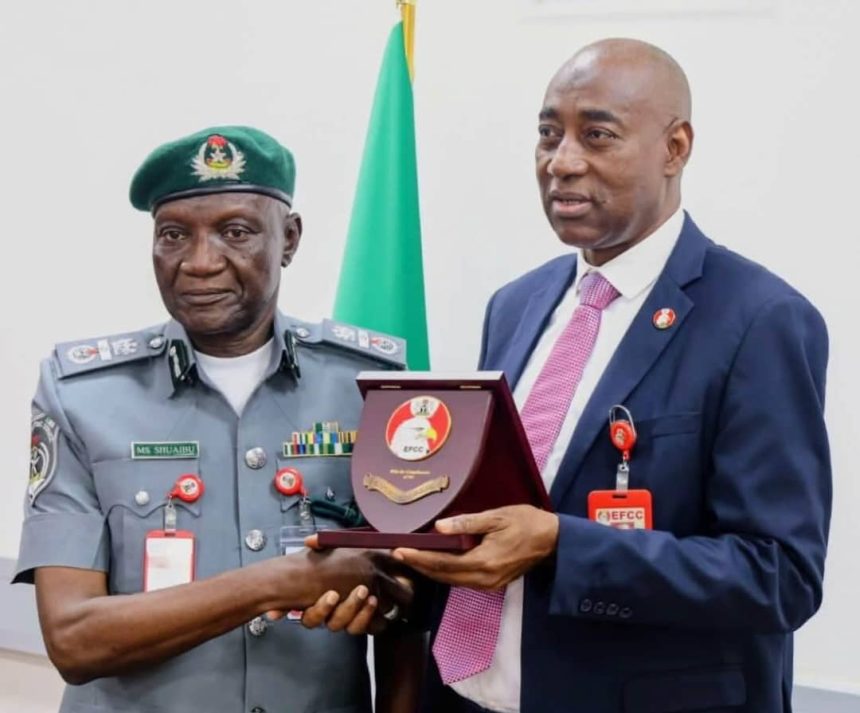
The renewed engagement followed a courtesy visit by a Customs delegation led by Assistant Comptroller-General M. S. Shuaibu to the EFCC headquarters in Jabi, Abuja, on Tuesday, October 27.
The visit focused on strengthening existing partnerships, improving intelligence sharing and identifying operational gaps in Nigeria’s Anti-Money Laundering and Countering the Financing of Terrorism (AML/CFT) framework.

Speaking during the engagement, Shuaibu commended the EFCC for its contributions to combating economic and financial crimes and sustaining cooperation with the Customs Service.
He explained that the visit provided an opportunity to assess existing arrangements and identify areas requiring improvement.
According to him, discussions would focus on case management, intelligence exchange, operational coordination and international best practices recommended by the WCO.
Shuaibu stressed that stronger collaboration among relevant agencies was essential to detecting illicit financial activities and preventing criminal networks from exploiting weaknesses in enforcement systems.
Responding on behalf of EFCC Executive Chairman Ola Olukoyede, the commission’s Secretary, Mohammad Hammajoda, welcomed the delegation and reaffirmed the agency’s commitment to sustained cooperation.
Hammajoda acknowledged the longstanding relationship between the EFCC and Customs, particularly in addressing money laundering and other financial crimes.
He also highlighted Nigeria’s removal from the Financial Action Task Force (FATF) grey list as an important achievement resulting from reforms and cooperation among relevant institutions.
Nigeria was officially removed from the list of jurisdictions under increased monitoring on October 24, 2025, after completing an agreed action plan to address identified weaknesses in its financial crime prevention framework.
The development marked progress in the country’s efforts to strengthen financial transparency and meet international anti-money laundering standards.

Hammajoda maintained that continued cooperation remained necessary to preserve those gains and prevent criminal activities that could undermine Nigeria’s financial system.
He further expressed the commission’s readiness to expand engagement with the WCO in capacity building, information sharing and coordinated operations.
The renewed partnership is expected to support more effective detection, investigation and prosecution of financial crimes involving cross-border transactions.
The agencies also emphasised the importance of sustained institutional cooperation in addressing emerging money laundering risks and preventing the financing of terrorism.
The engagement forms part of broader efforts to strengthen Nigeria’s financial crime enforcement framework and maintain compliance with international standards.