RismadarVoice Reporters
October 6, 2026
Ethiopian Prime Minister Abiy Ahmed has renewed his country’s push for access to the Red Sea, insisting that the landlocked nation will continue seeking a maritime outlet through negotiation and mutually beneficial arrangements.
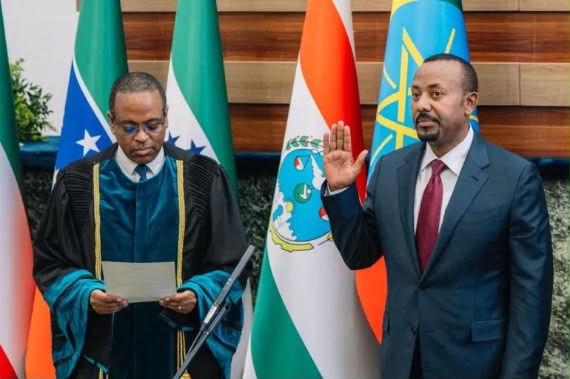
Abiy made the remarks on Monday after being sworn in for a new five-year term, as renewed fighting in northern Ethiopia and worsening relations with neighbouring countries fuel concerns over wider instability in the Horn of Africa.
Addressing Parliament, the prime minister described access to the sea as a strategic national priority and said Ethiopia would pursue the objective through dialogue.
“Based on the principle of give and take, we will work diligently to ensure that Ethiopia has an outlet to the sea,” Abiy said.
Ethiopia has been landlocked since Eritrea gained independence in 1993, leaving the country dependent largely on neighbouring states for access to international maritime trade.
Abiy’s renewed push comes as relations between Ethiopia and Eritrea have deteriorated sharply amid fresh fighting involving federal forces and opposition groups in the northern Tigray region.

Addis Ababa has accused Eritrea, Egypt and Sudan of supporting forces opposed to the Ethiopian government. The three countries have denied allegations of involvement in the fighting.
Eritrea has also expressed concern over Ethiopia’s pursuit of Red Sea access, amid fears that the dispute could further destabilise relations between the two neighbours.
The tensions are compounded by Ethiopia’s long-running disagreement with Egypt and Sudan over the Grand Ethiopian Renaissance Dam and the use of Nile waters.
On Sunday, leaders of Egypt, Eritrea, Sudan and Somalia met in New Alamein, Egypt, for a quadrilateral summit focused on developments in the Horn of Africa and the Red Sea.
The leaders stressed respect for national sovereignty and territorial integrity and maintained that governance and security arrangements concerning the Red Sea should respect the rights of coastal states.
Ethiopia subsequently maintained that discussions concerning the Red Sea must also take account of what it described as its legitimate interests and longstanding geographical and historical connection to the region.
Somali President Hassan Sheikh Mohamud has said his country does not oppose Ethiopia obtaining access to the Red Sea through Somali territory, but stressed that any such arrangement would have to be reached through formal negotiations.

The renewed maritime dispute comes as fighting has intensified in northern Ethiopia. Federal and allied forces recently re-entered Mekelle, the capital of Tigray, following the withdrawal of opposition fighters.
The African Union has urged Ethiopia and neighbouring countries to exercise restraint and resolve their differences through peaceful diplomatic channels.
Abiy, however, has continued to frame Ethiopia’s quest for sea access as an economic and strategic necessity, while maintaining that Addis Ababa intends to pursue it through negotiation rather than unilateral action.