RismadarVoice Reporters
November 17, 2026
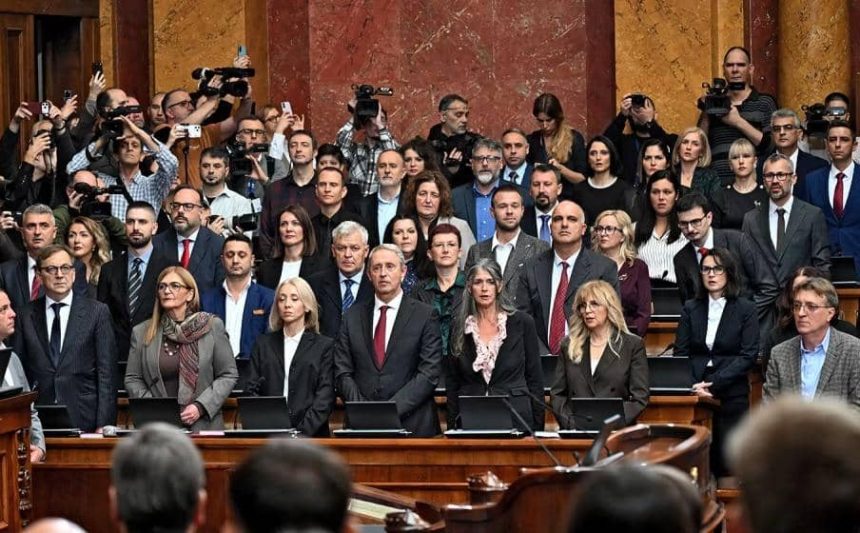
Serbia’s newly elected parliament convened in Belgrade on Tuesday following a historic electoral victory by a student-led political movement that defeated former President Aleksandar Vučić’s Serbian Progressive Party (SNS) in October’s snap parliamentary election.
The inaugural sitting of the 250-member National Assembly marks a major political transition after 14 years of dominance by Vučić and his political allies.
According to official election results, the Students’ List movement secured 140 parliamentary seats in the October 25 election, obtaining an outright majority.
The SNS-led electoral alliance won 103 seats, while representatives of ethnic minority parties secured the remaining seven.
The results enable the student-backed movement to form a government without depending on coalition partners.

Lawmakers are expected to elect a parliamentary speaker, deputy speakers and members of legislative committees before proceeding with the formation of a new government.
Under Serbia’s constitutional arrangements, the incoming parliament has 90 days to approve a government.
Hundreds of supporters gathered outside the National Assembly in Belgrade to welcome newly elected lawmakers, many of whom are academics, researchers, teachers and professionals with limited political experience.
The Students’ List emerged from nationwide anti-government demonstrations that began in November 2024 following the collapse of a railway station canopy in Novi Sad, which killed 16 people.
The tragedy triggered widespread protests against alleged corruption, poor construction standards and government accountability.
The demonstrations subsequently developed into a broader campaign demanding judicial independence, democratic reforms and stronger measures against corruption and organised crime.

Following its electoral victory, the movement pledged to strengthen democratic institutions, promote transparency and restore public confidence in governance.
Meanwhile, Vučić, who resigned as president in September, has entered parliament as an opposition lawmaker.
He has continued to criticise the student movement, accusing its supporters of politically motivated actions following a series of post-election arrests involving public officials and security personnel.
Serbia is also expected to conduct an early presidential election before the end of 2026, although a date has not been announced.
The political transition comes as the country continues its efforts to join the European Union amid longstanding concerns about democratic standards and its relationship with Russia.
European officials have expressed readiness to support the incoming administration in pursuing institutional reforms and advancing Serbia’s membership aspirations.