RismadarVoice Reporters
October 18, 2026
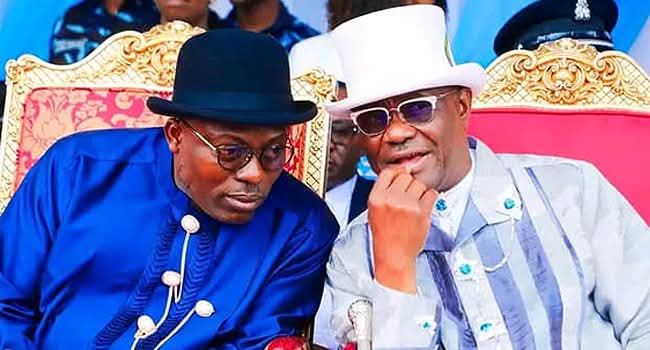
The Minister of the Federal Capital Territory, Nyesom Wike, has held a meeting with Rivers State Governor Siminalayi Fubara at the governor’s private residence in Port Harcourt, in another significant development in efforts to resolve the prolonged political crisis in the state.
The meeting, held on Sunday, October 18, brought together influential political figures, including members of the Rivers State House of Assembly, local government chairmen and representatives of the political camps that have been involved in the state’s leadership dispute.
The engagement comes as political activities intensify ahead of the 2027 general elections, with renewed attention on reconciliation, political alliances and the future of governance in Rivers State.
It was reportedly the first time Wike had visited Fubara at his private residence in Port Harcourt since the political disagreement between the two leaders escalated.
WIKE LEADS HIGH-POWERED DELEGATION
Wike was accompanied by a delegation comprising members of the Rivers State House of Assembly, led by Speaker Martin Amaewhule, as well as chairmen of the state’s 23 local government areas.
Also present was Kingsley Chinda, identified as the All Progressives Congress governorship candidate for the 2027 elections in Rivers State.
The delegation met with Fubara and members of his political camp as part of continuing consultations aimed at strengthening relations between the rival political groups.

The latest engagement followed an earlier meeting approximately two weeks ago, when Wike led members of the Rainbow Coalition, including Chinda, to meet the governor.
Although the full details of Sunday’s discussions were not immediately disclosed, sources familiar with the political developments indicated that the meeting focused on consolidating reconciliation efforts and exploring possible arrangements for cooperation.
The discussions were also reportedly intended to address the place of Fubara’s supporters within the emerging political structure ahead of the next elections.
However, no official agreement or detailed resolution had been announced following the meeting.
BACKGROUND TO RIVERS POLITICAL CRISIS
The relationship between Fubara and Wike deteriorated shortly after the governor assumed office in May 2023.
Wike, who governed Rivers State for eight years before becoming FCT minister, had supported Fubara’s emergence as his successor.
However, disagreements over political influence, appointments and control of party structures subsequently divided their supporters.
The conflict spread to the Rivers State House of Assembly, where lawmakers loyal to Wike became involved in a prolonged confrontation with the governor.
In October 2023, part of the legislative complex along Moscow Road in Port Harcourt was damaged by an explosion and fire amid rising political tensions.
The crisis led to competing political claims, legislative disputes and impeachment threats against the governor.
The confrontation also affected relations between the executive and legislative arms of government, raising concerns about the stability of governance in the oil-producing state.
TINUBU’S INTERVENTION AND EMERGENCY RULE
President Bola Tinubu intervened at different stages of the crisis in an attempt to reconcile the opposing political camps.
However, the disagreement persisted, with tensions extending beyond the state legislature into local government administration and political structures.
In March 2025, Tinubu declared a state of emergency in Rivers State, citing the breakdown of political cooperation and security concerns.
The declaration resulted in the suspension of Governor Fubara, his deputy and members of the state House of Assembly.
The President subsequently appointed retired Vice Admiral Ibok-Ete Ibas as the state’s sole administrator during the emergency period.
The intervention generated nationwide debate over constitutional governance, federal authority and the limits of emergency powers.
Following the end of the emergency arrangement, the suspended elected officials returned to office, creating an opportunity for renewed political engagement.
Nevertheless, questions surrounding political loyalty, legislative cooperation and the distribution of influence remained unresolved.
2027 ELECTIONS SHAPE NEW POLITICAL TALKS
The latest meeting comes at a crucial stage in preparations for the 2027 general elections.
With political parties and their supporters positioning themselves for the contests, the relationship between Wike and Fubara remains a major factor in Rivers State politics.
The participation of Chinda and the local government chairmen suggests that the consultations extend beyond personal reconciliation between the governor and his predecessor.
Political observers are likely to examine whether the discussions produce a broader arrangement involving legislative cooperation, political appointments, party structures and electoral alliances.
One important question is whether Fubara’s supporters will be accommodated within the emerging political arrangement and what role they may play in the 2027 elections.
The presence of Speaker Amaewhule and other lawmakers is also significant because relations between the governor and the state legislature have been central to the crisis.

Improved cooperation between both arms of government could reduce political confrontation and create a more stable environment for governance.
RECONCILIATION OUTCOME REMAINS UNCERTAIN
Despite the renewed engagement, it remains unclear whether the meeting will produce a lasting political settlement.
Previous reconciliation attempts have encountered difficulties, with disagreements resurfacing over the implementation of political understandings.
The latest talks nevertheless represent another opportunity for the principal actors to address longstanding differences and reduce tensions ahead of the elections.
For Rivers residents, the outcome could have implications for governance, political stability and the functioning of state institutions.
Attention will now turn to whether Wike, Fubara and the legislative leadership announce concrete agreements or take further steps demonstrating sustained cooperation.
As of Sunday evening, no formal communiqué detailing the outcome of the private meeting had been made public.