RismadarVoice Reporters, September 1, 2026
Leaders of six opposition political parties have proposed a single four-year transition government as part of efforts to build a coalition capable of defeating President Bola Tinubu and the All Progressives Congress in the 2027 general elections.
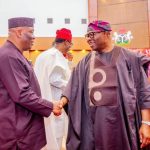
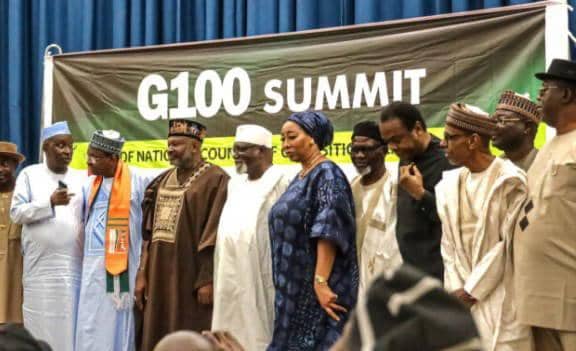
The proposal was presented at an opposition summit organised by the G-100 in Abuja, where representatives of the African Democratic Congress (ADC), Allied Peoples Movement (APM), Nigeria Democratic Congress (NDC), a faction of the Peoples Democratic Party (PDP), Peoples Redemption Party (PRP) and Social Democratic Party (SDP) met to develop a framework for cooperation.
However, some prominent opposition figures, including former Vice President Atiku Abubakar, Peter Obi and Oyo State Governor Seyi Makinde, were absent from the meeting.

Among those present were SDP presidential candidate Adewole Adebayo, PRP presidential candidate Donald Duke and APM vice-presidential candidate Lawal Musa Daura, alongside national officers and other senior party officials.
Presenting the G-100 proposal, former APC chieftain Salihu Lukman said the coalition should focus on establishing a “Government of National Competence” based on competence, integrity, inclusion and equitable representation.
He proposed that any such arrangement should be bound by a single four-year term through an enforceable transition charter.
Lukman stressed that agreements reached by the opposition must have clear consequences for non-compliance, arguing that previous political agreements had often failed because they were not enforceable.

He said the proposed arrangement was not intended to force any participating party to dissolve or merge, nor was it designed to compel any presidential candidate to immediately withdraw from the race.
According to him, the immediate objective was to establish a framework through which the parties could negotiate their eventual political arrangements.
Lukman said the opposition’s failure to coordinate its presidential votes in 2023 contributed significantly to the APC’s victory.
He argued that the combined votes secured by the major opposition candidates exceeded those of the eventual winner but were divided among different candidates.
He described the experience as a lesson in electoral arithmetic, stressing that opposition parties would have to prioritise cooperation if they wanted to defeat the ruling party in 2027.
He cited examples from other countries where opposition parties united to defeat long-standing ruling parties, arguing that political unity could transform the electoral fortunes of Nigeria’s opposition.

The G-100 also proposed three key coalition structures: a Central Leadership Committee made up of senior party officials and presidential and vice-presidential candidates; a publicity and communication committee; and a legal committee.
Five additional working groups are expected to develop proposals on democratic renewal, a single-term transition charter, a national reform programme, opposition unity and the selection of a common presidential candidate.
The documents are expected to be presented at a second summit for consideration and adoption.
Donald Duke said he was prepared to sacrifice his personal presidential ambition if that would facilitate the emergence of a candidate acceptable to all participating opposition parties.
The former Cross River State governor said personal ambition and political ego had historically undermined opposition efforts.
He urged politicians to place national interest above individual aspirations, warning that parties attempting to contest the election independently could again divide opposition votes.
The Minority Leader of the House of Representatives, Fred Agbedi, urged opposition parties to learn from the APC’s successful coalition strategy ahead of the 2015 election.

Agbedi said the House Minority Caucus had resolved to work with the G-100 to help opposition parties coordinate their ambitions and pursue a common electoral objective in 2027.
He warned that another fragmented opposition could reproduce the circumstances of 2023, when votes for different opposition candidates were split.
Representatives of the participating parties expressed support for the coalition initiative.
ADC representative Usani Uguru Usani urged opposition leaders to stop attacking one another and instead focus on challenging the ruling party.
APM National Chairman Yusuf Mamman Dantalle described the summit as a significant development and urged politicians to put the country’s interests ahead of party and personal considerations.
Representing the Tanimu Turaki-led PDP faction, former Niger State Governor Babangida Aliyu backed the initiative and called for similar coalition-building efforts at state and local government levels.
PRP National Chairman Hakeem Baba-Ahmed said Nigerians were watching the process closely, adding that the participating parties faced significant political and legal challenges but remained determined to continue.
SDP National Chairman Sadiq Gombe also pledged his party’s commitment to the coalition process, saying Nigerians remained willing to support credible alternatives that could deliver good governance.
NDC National Chairman Moses Cleopas Zuwoghe said the coalition was necessary to provide an alternative political direction for the country.

At the end of the summit, the six parties adopted a communiqué committing themselves to a structured negotiation process ahead of the 2027 elections.
They formally established the Central Leadership Committee, Publicity and Communication Committee and Legal Committee, while approving the creation of the five working groups.
The parties agreed that the groups should submit their reports within four weeks ahead of a second summit, where the proposed framework and roadmap towards a common presidential candidate would be considered.
They also resolved to communicate their position to the ECOWAS Commission and reaffirmed that the G-100 would remain a facilitator and observer rather than assume the authority of the participating political parties.

Meanwhile, Atiku Abubakar has denied deliberately boycotting the summit.
His Senior Special Assistant on Public Communication, Phrank Shaibu, said the former vice president’s absence was unavoidable and should not be interpreted as a rejection of the coalition initiative.
He said Atiku remained committed to building a united opposition capable of challenging the APC in 2027.