RismadarVoice Reporters
October 17, 2026
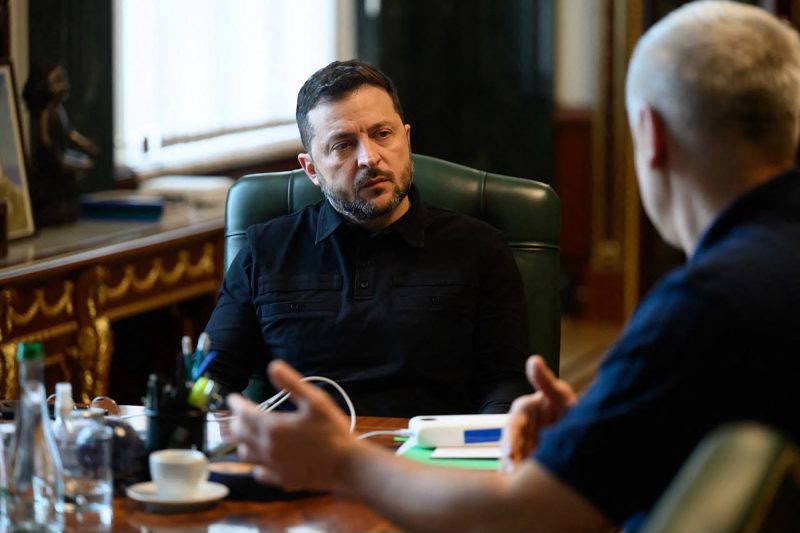
Ukrainian President Volodymyr Zelensky has strongly criticised United States President Donald Trump over his reported decision to suspend sweeping sanctions targeting Russia’s energy sector, warning that easing economic pressure on Moscow could encourage further attacks on Ukraine.
Zelensky accused Washington of weakening efforts to restrain Russian President Vladimir Putin at a critical stage of the war, as Russian forces intensify attacks on Ukrainian cities and energy infrastructure ahead of winter.
The Ukrainian leader argued that reducing sanctions pressure while Russian military operations continue could undermine international efforts to secure a negotiated end to the conflict.

His remarks followed reports that Trump had issued an executive order suspending sanctions associated with legislation targeting Russia’s energy revenues, defence sector and individuals linked to the Kremlin.
The reported decision has generated concern in Kyiv and among European leaders, who fear that reduced economic pressure could strengthen Moscow’s ability to sustain its military campaign.
ZELENSKY SAYS SANCTIONS RELIEF ENCOURAGES RUSSIAN ATTACKS
Speaking on Saturday, Zelensky accused the United States administration of providing Russia with economic relief despite continued attacks on Ukrainian territory.
He maintained that sanctions targeting Russia’s energy exports were intended to reduce Moscow’s financial capacity to continue the war.
The Ukrainian president argued that weakening those restrictions could embolden Putin rather than encourage meaningful peace negotiations.
“It is important that everyone in America also sees what is really happening,” Zelensky wrote on social media.
He accused Russia of continuing attacks against civilians and critical infrastructure while benefiting from reduced international economic pressure.
Zelensky warned that the consequences could be particularly severe during winter, when millions of Ukrainians depend on reliable electricity and heating.
His criticism reflects growing disagreement over the role of economic sanctions in diplomatic efforts to end the war.

UKRAINE REPORTS ATTACKS ON 15 POWER FACILITIES
The Ukrainian president also reported that Russian forces had targeted 15 critical power-generation facilities across the country in a major wave of attacks.
According to Zelensky, the strikes formed part of a wider campaign against Ukraine’s energy infrastructure.
He warned that Moscow was attempting to undermine the country’s electricity supply and leave civilians without adequate heating during the colder months.
The reported attacks have heightened concerns about Ukraine’s ability to maintain essential services during winter.
Energy infrastructure has repeatedly been targeted since Russia launched its full-scale invasion in February 2022.
Previous attacks have caused extensive damage to power stations, transmission facilities and distribution networks, forcing authorities to introduce emergency restrictions on electricity supply.
The latest reported strikes have renewed calls for additional air-defence equipment and international assistance to protect critical infrastructure.
CIVILIANS KILLED AS RUSSIAN STRIKES CONTINUE
The sanctions dispute comes amid reports of further Russian attacks on Ukrainian cities.
Ukrainian officials reported that at least two people were killed in separate strikes following the announcement of the reported American sanctions waiver.
In the southern city of Kherson, authorities said one person was killed, and 22 others were injured, including two children.
Another fatality was reported in the northeastern city of Sumy.
The attacks have added to concerns about civilian safety as Russian forces continue missile, drone and artillery operations.
Ukraine has repeatedly appealed to its international partners for stronger air-defence systems to intercept incoming missiles and drones.
The country’s energy facilities remain particularly vulnerable because successful attacks can disrupt electricity and heating supplies far beyond the immediate impact areas.

TRUMP’S REPORTED WAIVER SPARKS CONTROVERSY
The dispute centres on reports that President Trump suspended sanctions associated with the Lindsey Graham Act, legislation aimed at increasing economic pressure on Russia.
The measures were described as targeting Russia’s energy and defence sectors, senior officials and the network of tankers commonly referred to as the shadow fleet.
Those vessels have been accused of helping Moscow maintain oil exports despite Western restrictions.
According to the reported developments, Trump’s decision was linked to efforts to increase international diesel supplies and ease pressure on global energy markets.
The reports suggested that Washington and Moscow had discussed sanctions relief in exchange for Russia making additional diesel available to international buyers.
However, the precise legal scope of the reported executive order and the terms of any agreement require confirmation from official American documents.
Zelensky maintained that any reduction in economic pressure should be assessed against Russia’s continuing military operations.
RUSSIAN ENVOY WELCOMES REPORTED SANCTIONS SUSPENSION
While the Kremlin had not issued a detailed official response to the reported waiver, Russian presidential envoy Kirill Dmitriev welcomed the development.
Dmitriev reportedly described the suspension of the sanctions measures as an important and historic decision.
He argued that implementing the restrictions would have caused economic disruption extending beyond Russia to the United States and international markets.
His remarks reflected Moscow’s longstanding opposition to Western sanctions, which Russian officials have repeatedly criticised as economically damaging.
However, Ukraine and several European governments maintain that sanctions remain an important instrument for limiting Russia’s ability to finance the war.

EUROPEAN LEADERS URGE CONTINUED PRESSURE ON MOSCOW
The reported American decision has also prompted concern among European leaders, who have called for sustained support for Ukraine.
Zelensky met European leaders in Brussels on Friday, seeking continued financial and military assistance as the war enters another winter period.
During the discussions, he urged European governments to maintain pressure on Moscow and strengthen Ukraine’s ability to defend itself.
European Council President António Costa warned against reducing support for Kyiv or relaxing sanctions targeting Russia.
“This is no time to withdraw the support to Ukraine. This is no time to relieve Russia’s sanctions,” Costa said.
“Now it is time to increase our support, to increase our pressure.”
The remarks highlighted the continuing importance European leaders attach to sanctions and military assistance as instruments for supporting Ukraine.
PUTIN REAFFIRMS MILITARY OBJECTIVES IN EASTERN UKRAINE
Meanwhile, President Vladimir Putin has reiterated Russia’s determination to capture the remaining Ukrainian-controlled areas of the eastern Donetsk region.
Speaking to Russian military leaders on Friday, Putin reportedly expressed satisfaction with the progress of Russian forces.
He identified the capture of the remaining parts of Donetsk as a major military objective.
Russia currently controls substantial areas of eastern and southern Ukraine following years of fighting.
However, Ukrainian forces continue to resist Russian advances, with heavy fighting reported along several sections of the front line.
Putin’s remarks suggest that Moscow remains committed to pursuing its territorial objectives despite ongoing diplomatic efforts.
PEACE TALKS REMAIN STALLED
Efforts by Washington and other international partners to negotiate an end to the conflict have yet to produce a comprehensive peace agreement.
Trump has expressed frustration with the lack of progress, while Moscow and Kyiv remain divided over territorial control, security guarantees and the conditions for ending hostilities.
The disagreement over sanctions has introduced another complication into the diplomatic process.
Ukraine argues that continued pressure is necessary to encourage Russia to negotiate seriously.
Russian officials, meanwhile, have maintained that Western sanctions are ineffective and harmful to broader economic interests.
UKRAINE BRACES FOR ANOTHER DIFFICULT WINTER
As temperatures begin to fall, Ukraine faces the challenge of protecting its civilian population and maintaining essential services.
During previous winters, Russian attacks on energy infrastructure caused widespread electricity outages and heating disruptions.
The latest reported strikes have raised fears that millions of people could again face prolonged interruptions to electricity and heating.
Ukrainian authorities are seeking additional air-defence systems, equipment for emergency repairs and financial assistance to strengthen energy resilience.
Zelensky has urged international partners to recognise the humanitarian consequences of attacks on power infrastructure and maintain coordinated pressure on Moscow.
The dispute over American sanctions relief underscores the increasingly complex relationship between military developments, energy markets and diplomatic efforts to end the war.
For Ukraine, the immediate priority remains protecting civilians and critical infrastructure while seeking international support to resist further Russian attacks.
The effectiveness of sanctions, the direction of American policy and Russia’s continuing military objectives are likely to remain central issues as the conflict approaches another winter.