RismadarVoice Reporters
October 13, 2026
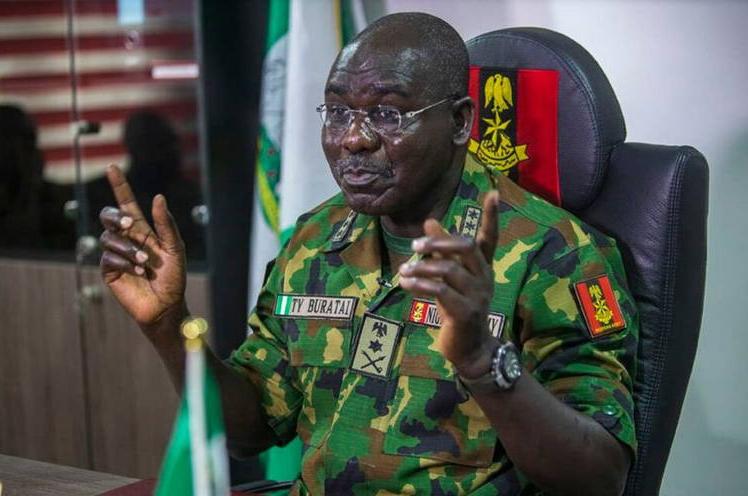
Former Chief of Army Staff, Lt. Gen. Tukur Yusuf Buratai (retd.), has denied allegations linking military service chiefs to the alleged diversion of $1 billion approved for defence procurement, insisting that the funds were released to the Federal Ministry of Defence.
Buratai maintained that neither he nor the Nigerian Army, Navy or Air Force directly received the money, explaining that responsibility for procurement and contract administration rested with the ministry.
He said the funds were approved by the National Economic Council (NEC) to support the acquisition of military equipment and strengthen Nigeria’s security operations.
According to the former army chief, allegations that the money was diverted for political purposes emerged during the 2019 general election and have continued to generate controversy despite earlier government denials.
Buratai described the allegations as politically motivated and maintained that the military services should not be held responsible for funds they did not administer.

He criticised the Ministry of Defence for what he described as its failure to provide a comprehensive public account of the disbursement of the funds and the contracts awarded under the procurement programme.
Buratai argued that responsibility for explaining how the money was utilised should rest with the institution that managed the procurement process.
He consequently proposed the establishment of a Defence Procurement Transparency Portal through which information on defence contracts, contractors, procurement progress and delivery schedules could be made available to the public, subject to national security considerations.
The former army chief said greater transparency would strengthen accountability, improve public confidence and reduce speculation surrounding military expenditure.
His remarks did not independently establish how the $1 billion was ultimately spent or resolve the allegations surrounding its utilisation.
BURATAI CALLS FOR ACCOUNTABILITY OVER MILITARY MISCONDUCT
Addressing allegations of human rights violations involving security personnel, Buratai maintained that credible complaints should be investigated and appropriate disciplinary or legal action taken where evidence establishes wrongdoing.
He stressed that military personnel remained subject to Nigerian law and should be held accountable for proven misconduct.
Buratai also recommended quarterly accountability bulletins containing summaries of court-martial proceedings involving alleged human rights violations and operational misconduct.
He said such disclosures should protect the rights of accused personnel while avoiding the release of information capable of compromising ongoing military operations.
According to him, improved communication between the Armed Forces, the Ministry of Defence and the public would help clarify security-related controversies and strengthen confidence in military institutions.
LAWAN SEEKS DEDICATED FUNDING FOR SECURITY AGENCIES
Former Senate President Ahmed Lawan also called for a defined percentage of Nigeria’s revenue to be dedicated to the Armed Forces and other security agencies.
Lawan said predictable funding would improve the ability of security institutions to acquire equipment, maintain operational platforms and respond to emerging threats.
He maintained that the National Assembly had consistently supported security-related funding requests submitted by the executive through the budgetary process.
According to him, sustained investment in military capabilities remained essential to addressing the country’s security challenges.

DEFENCE MINISTER ADVOCATES INTELLIGENCE-LED OPERATIONS
Meanwhile, Minister of Defence, Gen. Christopher Musa, has called for stronger intelligence gathering, technological investment and coordination among Nigeria’s security institutions.
Musa, represented by his Senior Special Assistant on Foreign Relations, Air Commodore Steven Ogunmodede (retd.), said evolving security threats required approaches that combined reliable intelligence, modern equipment and effective inter-agency cooperation.
He observed that terrorist organisations and criminal networks increasingly exploited technological developments, financial systems and weaknesses in institutional coordination.
The minister said surveillance, reconnaissance, communication systems and intelligence analysis could significantly improve security operations when supported by trained personnel and effective operational planning.
He emphasised that investment in technology must produce measurable improvements in protecting lives, safeguarding national territory and responding to security threats.
Musa further urged security institutions to strengthen information sharing and operational cooperation, noting that no single agency possessed all the resources and intelligence necessary to address Nigeria’s security challenges.
The statements renewed attention to defence procurement accountability, military funding and the need for stronger institutional oversight of security expenditure.