RismadarVoice Reporters
October 9, 2026
Ethiopia and Eritrea have traded accusations of military aggression amid reports of troop movements and renewed fighting in northern Ethiopia, raising concerns about a wider conflict in the Horn of Africa.
Ethiopia has accused Eritrea of invading parts of its territory, while Eritrea has rejected the allegations and accused Addis Ababa of pursuing an aggressive campaign against its sovereignty.
In a letter addressed to the United Nations Security Council, Ethiopian Foreign Affairs Minister Gedion Timothewos alleged that Eritrean troops had advanced approximately 60 kilometres into the Tigray region.
Timothewos described the reported incursion as an act of aggression and demanded the withdrawal of Eritrean forces, maintaining that Ethiopia reserved the right to defend its territorial integrity.
Eritrea, however, disputed Ethiopia’s account.
Eritrean Information Minister Yemane Gebremeskel accused Prime Minister Abiy Ahmed’s administration of pursuing a hostile policy towards Eritrea and using regional security concerns to justify its ambitions for access to the Red Sea.

Gebremeskel alleged that Ethiopia was seeking an opportunity to gain control of Assab, Eritrea’s strategically important Red Sea port.
He maintained that Eritrea had exercised restraint despite what he described as repeated threats from Ethiopian authorities.
Eritrea also denied allegations that it was supporting the Tigray People’s Liberation Front, TPLF, amid renewed hostilities involving Ethiopian government forces.
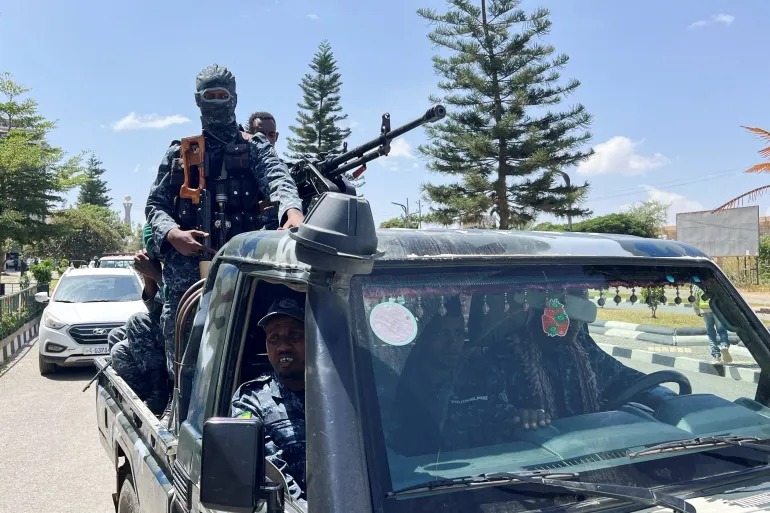
Reports from northern Ethiopia indicate that government troops have intensified operations against TPLF fighters, with claims that federal forces have regained control of Mekelle and other strategic locations.
There have also been reports of military activity around Shire and Adigrat, including alleged Eritrean troop movements and Ethiopian drone operations.
However, the competing accounts of territorial control, troop deployments and military operations have not been independently verified.
The escalating confrontation has further strained relations between the neighbouring countries, which have reportedly taken steps to sever diplomatic ties.
Ethiopia was reported to have closed its embassy in Eritrea and ordered 10 Eritrean diplomats to leave, while Eritrea subsequently announced the termination of diplomatic relations.
Relations between the two countries have experienced significant changes since Eritrea gained independence from Ethiopia in 1993.
The neighbours fought a border war between 1998 and 2000 before relations improved in 2018 following Abiy Ahmed’s emergence as Ethiopian prime minister.
Eritrean forces later supported Ethiopian federal troops during the Tigray conflict between 2020 and 2022.
However, Eritrea was not a party to the peace agreement that ended the war, and relations between the former allies subsequently deteriorated.

A major source of disagreement remains Ethiopia’s pursuit of maritime access.
As a landlocked country, Ethiopia has repeatedly emphasised the economic importance of securing access to the sea, while Eritrea has expressed concern that Ethiopia’s ambitions could threaten its territorial sovereignty.
The latest accusations have intensified concerns about the possibility of another armed confrontation, particularly as renewed instability in Tigray threatens the fragile security situation across the region.
With both governments maintaining sharply opposing positions, the immediate prospects for diplomatic resolution remain uncertain.