

RismadarVoice Reporters
September 23, 2026
The United States and Iran have held hours of mediated talks on the sidelines of the United Nations General Assembly in New York as diplomatic efforts intensify towards ending hostilities and reopening the Strait of Hormuz.
US Special Envoy Steve Witkoff said mediators moved between American and Iranian delegations throughout Tuesday during what he described as lengthy discussions.
Witkoff said a round of talks had been completed and expressed hope that the discussions would prove constructive, adding that mediation efforts would continue.
President Donald Trump gave a somewhat different account, saying Witkoff and Jared Kushner participated in a three-hour meeting involving Iranian officials.
Trump described the discussions as productive and said further engagement was expected.
Reports from Iran indicated that Foreign Minister Abbas Araghchi had contact with Witkoff, although accounts differed over the extent to which Tuesday’s negotiations were conducted directly or through intermediaries.

IRAN PRESENTS CONDITIONS
The Strait of Hormuz emerged as one of the central issues in the discussions.
Iran has indicated that reopening the strategic waterway would depend on reciprocal steps from Washington, including easing military pressure and lifting restrictions affecting Iranian ports.
Iranian accounts of the negotiations also listed the release of frozen Iranian assets and an end to hostilities on fronts involving Tehran and its regional allies among its demands.
A senior Iranian official had earlier said Tehran could reopen the Strait of Hormuz within seven days if the United States took corresponding steps to reduce military and economic pressure.
Iran submitted its latest proposal to Washington through mediators on September 16, according to the official.
No final agreement on those conditions had been announced as of Wednesday.
REGIONAL POWERS PUSH DIPLOMACY
The US-Iran contacts are taking place alongside wider diplomatic efforts involving several Middle Eastern countries.
Qatar has been involved in mediation efforts aimed at reducing tensions, protecting navigation through the Strait of Hormuz and creating conditions for further dialogue.
Iranian Foreign Minister Araghchi also met Qatar’s Prime Minister and Foreign Minister, Sheikh Mohammed bin Abdulrahman bin Jassim Al Thani, in New York.
Oman has separately participated in diplomatic efforts concerning maritime arrangements and navigation through the strait.
Regional discussions have also included the possibility of a broader security framework involving Iran and Gulf states, although no final arrangement has been publicly announced.
MAJOR DIFFERENCES REMAIN
Despite renewed diplomatic contacts, substantial differences remain between Washington and Tehran.
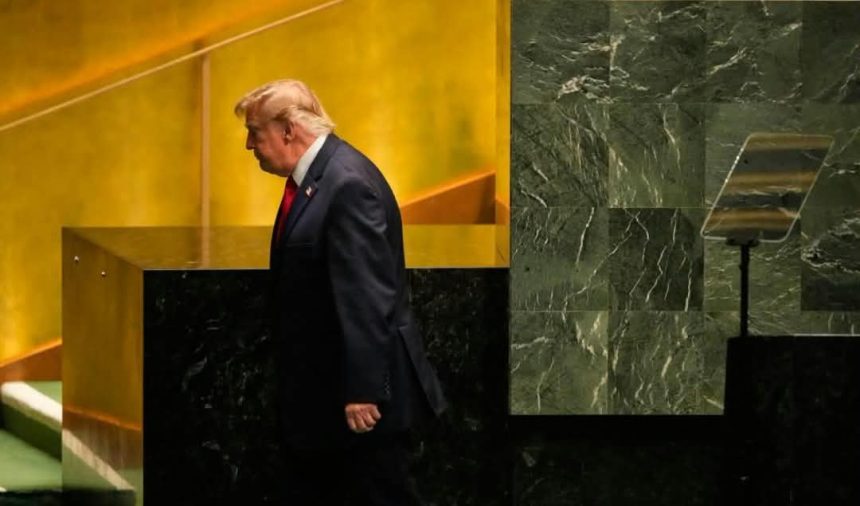
Trump used his address to the UN General Assembly to combine the possibility of reaching an agreement with warnings of further military action if diplomacy failed.

Iranian military authorities responded by warning that further attacks would trigger retaliation.
The competing statements underline the continuing tension surrounding the negotiations even as both sides maintain channels for diplomacy.
For Tehran, the reopening of the Strait of Hormuz remains tied to concessions from Washington. For the United States, negotiations are part of a wider effort to address the conflict and outstanding security issues involving Iran.
The Strait of Hormuz remains one of the world’s most strategically important shipping routes, making the outcome of negotiations significant beyond the two countries.
Mediators are expected to continue their engagement as Washington and Tehran consider whether the latest round of contacts can produce a broader agreement to reduce hostilities and restore navigation through the waterway.