

RismadarVoice Reporters
September 9, 2026
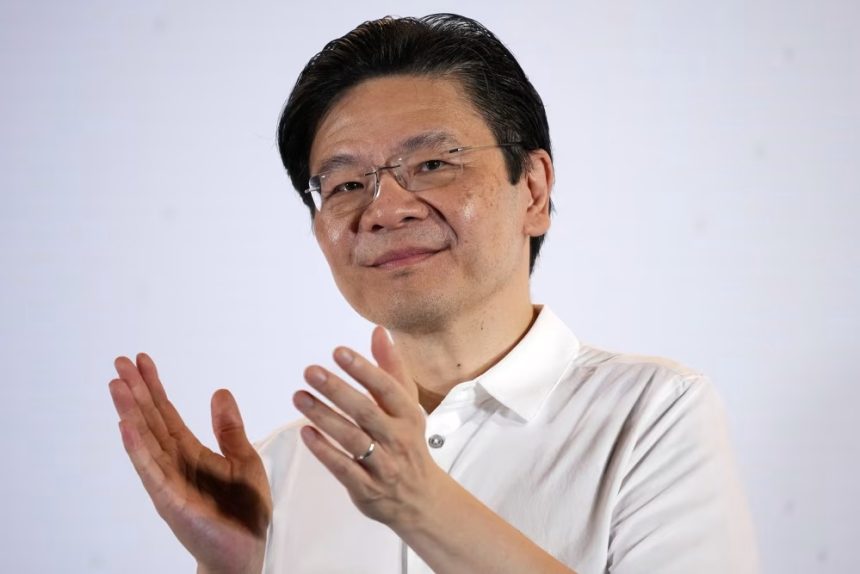
Singapore’s Prime Minister, Lawrence Wong, is set to receive a 64 per cent increase in his annual salary, taking his remuneration to 3.6 million Singapore dollars ($2.85 million).
The new pay package for Singapore’s political office holders will take effect from October 15, Mr Wong announced on Tuesday.
The adjustment will raise the prime minister’s annual salary from S$2.2 million to S$3.6 million, further cementing Singapore’s position as the country with the highest-paid political leader in the world.
Singapore has long defended its generous remuneration for political leaders, arguing that competitive salaries help the government attract highly qualified individuals and reduce incentives for corruption.

However, the latest increase has generated public debate in the city-state, where the median monthly income was S$5,775 in 2025.
Acknowledging the sensitivity surrounding political salaries, Mr Wong told parliament that the amounts were significantly higher than what most Singaporeans earn.
He said he understood why citizens closely scrutinise the salaries but argued that the issue went beyond financial compensation.
Mr Wong said he would donate the increase in his salary to charity for the next five years.
According to data from PoliticalSalaries.com, a nonprofit organisation that tracks political remuneration, the Singaporean prime minister remains the world’s highest-paid national leader.
The British prime minister earns about $230,000 annually, while United States President Donald Trump receives $400,000.
The chief executive of Hong Kong ranks second globally at approximately $719,000 per year, followed by the Swiss president, who earns about $606,000.
The government is also increasing the remuneration of junior ministers.
Their current annual salary of about S$1.1 million will eventually rise to as much as S$1.8 million, depending on their responsibilities and performance.

However, the increase will not be implemented in full immediately. Political office holders will first receive a one-off adjustment of up to nine per cent, with subsequent increases tied to performance.
By the end of the current government’s term, most junior ministers are expected to earn about S$1.35 million annually, while high-performing ministers could earn more.
Singapore last made a major adjustment to political salaries in 2012, when ministers accepted a 36 per cent reduction following public criticism over their earnings.
Although salaries were reviewed again in 2017, the government rejected a recommendation to increase them.
A further review scheduled for 2023 was postponed because of economic uncertainty.
Mr Wong said it would have been politically easier to maintain the existing salaries but argued that doing so would not be appropriate because remuneration in the private sector, civil service, judiciary and wider public sector had increased since the last major adjustment.
The salary increase has sparked mixed reactions online, with some Singaporeans criticising the move as insensitive, while others argued that higher pay could be justified if it helped attract capable leaders and improve government performance.
Opposition parties had not issued public statements on the matter as of Tuesday.
The government uses the earnings of the top 1,000 Singaporeans as a benchmark for determining ministerial salaries. The Public Service Division says the group represents the level of ability and quality it seeks to attract into government.
However, Chong Ja Ian, a political scientist at the National University of Singapore, questioned whether the benchmark adequately reflected the experiences of ordinary citizens.

He warned that growing income inequality could make political leaders increasingly identify with wealthy Singaporeans rather than the wider population.
Singapore has traditionally linked high political salaries to its record of relatively low corruption.
Nevertheless, the country has recorded notable graft cases. Former Transport Minister S. Iswaran was sentenced to prison in 2024 after being convicted of obstructing justice and accepting gifts worth more than S$300,000.