RismadarVoice Reporters
August 31, 2026
The Federal Government of Nigeria says ongoing rail and port projects will reduce road accidents, extend the lifespan of highways and create thousands of jobs in the transport sector.
The Permanent Secretary, Ministry of Transportation, Funsho Adebiyi, stated this on Monday in Abuja at the 19th National Council on Transportation.
The meeting, themed “Developing Effective Transport System for Nigeria: The Role of Integrated Trans portation,” focused on improving connectivity and integrating the various modes of transportation across the country.
Adebiyi said the ongoing projects were designed to address connectivity gaps and improve the movement of passengers and cargo nationwide.
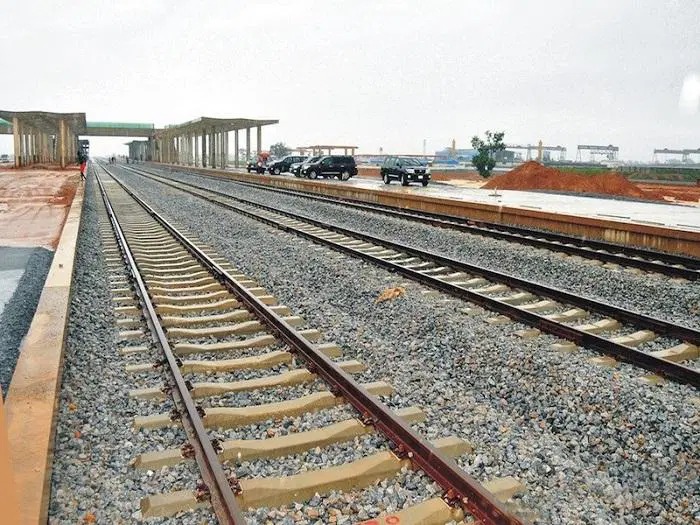
According to him, the completion of the Ibadan-to-Minna rail line would enable a significant volume of heavy cargo to be transported by rail instead of roads, thereby reducing pressure on highways.
He added that dry ports along the rail corridor would facilitate container handling and reduce the distance trucks travel to deliver goods.
“By the time that one is completed, you now have a dry port where each container can be moved and offloaded.

“So, the distance to be covered by trucks will now be from the train station into the city where the services are to be delivered,” he said.
Adebiyi explained that moving more cargo by rail would reduce highway deterioration and improve road safety.
“This simply means the pavements will last longer. The accident rates will be reduced. The risk on our roads will be reduced,” he said.
The permanent secretary also disclosed that reconstruction was ongoing at Apapa Port, with the entire deck being rebuilt to improve port operations.
He said port operations were being automated and procedures for vessels were being updated to enhance efficiency.
“So, port congestion will soon be a thing of the past. Cargo movement becomes easier, efficient, safe, faster, economical,” Adebiyi said.
He added that the accident rate had significantly reduced, urging Nigerians to support government efforts to develop an efficient transportation system.
According to him, the ongoing transport transition would deliver broader economic benefits, including improved accessibility, trade facilitation, economic growth and employment opportunities.
Speaking at the meeting, Dr Emmanuel Oche of Transport Growth Initiative stressed the need for a human-centred transportation system.
Oche said integrating public transportation with private-sector participation should focus primarily on citizens’ needs rather than industrial interests.
“Nowhere in the world is public transport infrastructuretructure is built for profit; it is not possible.
“It is social service investment that profits everybody. Nobody loses when public transport works,” he said.
He said high transportation costs were worsening poverty in the country, arguing that an integrated public transport system, alongside walking and cycling infrastructure, could help address the challenge.
Oche called for coordinated transport options that would provide affordable, accessible and efficient mobility for Nigerians.
Declaring the meeting open, the Head of the Civil Service, Abel Enitan, described transportation as the lifeblood of the modern economy.
Enitan, who was represented by Dr Ishiyaku Musa, Permanent Secretary, Service Policies and Strategies Office, said transportation was critical to Nigeria’s industrial and economic development.
He defined integrated transportation as a system that moves people and goods quickly, safely and affordably while minimising fatalities and environmental challenges.

“It connects people and communities, facilitates movement of goods and services, expands access to markets, supports trade and investment,” he said.
Enitan said efficient transportation would support industrial and economic growth and help Nigeria realise its full economic potential.
He stressed that integration required seamless connectivity among different modes of transportation, including unified payment systems and synchronised schedules.
According to him, commuters should ideally be able to travel from their point of origin to their destination using a single ticket or an integrated transport arrangement.
The Head of Service also said integration should minimise human-to-human interactions in the transport system to reduce opportunities for corruption.
He noted that the National Council on Transportation had provided a platform for federal and state governments to coordinate transport policies for nearly two decades.
Enitan described the meeting as timely and strategic, given Nigeria’s current stage of national development.
“We must develop a well-connected, efficient, and resilient transport system in which road, rail, air, and maritime transport operate as complementary components,” he said.
He added that pipelines and other logistics infrastructure should also form part of an integrated national transport network.