RismadarVoice Reporters, August 26, 2026
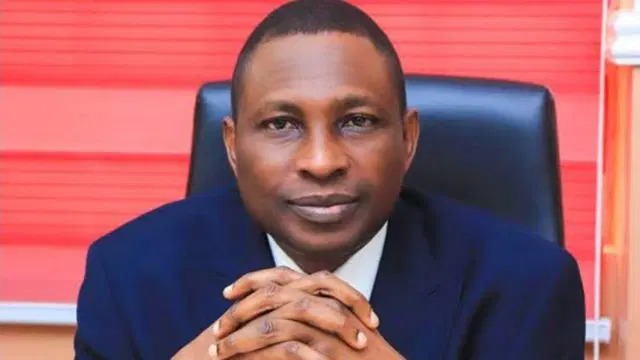
The Chairman of the Economic and Financial Crimes Commission, EFCC, Ola Olukoyede, has disclosed that the anti-graft agency has recovered and secured the forfeiture of cash and assets worth more than $500 million for the Federal Government within the past three years.
Olukoyede disclosed this while delivering a lecture at the Cambridge International Symposium on Economic Crime in the United Kingdom.
According to the EFCC chairman, the commission has relied significantly on non-conviction-based asset forfeiture in its efforts to recover proceeds suspected to have been obtained through criminal activities.

He explained that Nigeria’s legal framework allows the EFCC to approach the High Court for the forfeiture of assets suspected to be proceeds of crime without necessarily waiting for a criminal conviction.
Olukoyede said the procedure is comparable to legal provisions in countries including Australia and Canada.
He explained that the process begins with an application made ex parte to the High Court based on reasonable suspicion that an asset represents proceeds of crime.
“Within three years of my assumption of office, we’ve been able to forfeit both cash and assets worth over half a billion dollars to the government,” he said.
The EFCC chairman cited several cases to illustrate the commission’s recent recoveries.
According to him, the agency secured the forfeiture of an aircraft allegedly connected to an individual who was accused of receiving a $30 million bribe in connection with a power project.
He said the aircraft was forfeited within about two months of the commission’s application to the court and had subsequently been incorporated into the presidential air fleet.

Olukoyede also disclosed that the EFCC secured the forfeiture of a property comprising approximately 753 housing units from a former governor of the Central Bank of Nigeria.
He said criminal proceedings involving the former CBN governor were ongoing in three different courts.
The EFCC chairman further disclosed that the commission had traced 57 properties allegedly linked to former Attorney-General of the Federation and Minister of Justice, Abubakar Malami, following an investigation into alleged abuse of office.
Olukoyede said the investigation was initiated after the commission developed reasonable grounds to suspect criminal misconduct.
He added that the EFCC had so far secured the forfeiture of about 48 of the properties allegedly traced to the former attorney-general.
The commission’s chairman also mentioned a private university allegedly linked to a director in the Federal Ministry of Health, saying the property was surrendered voluntarily following an EFCC investigation.
Olukoyede attributed the commission’s success in asset recovery to the ability of investigators to trace suspected illicit assets, cooperation from the judiciary and access to reliable intelligence.

He said EFCC personnel had undergone training at reputable institutions in different parts of the world to strengthen their investigative capabilities.
According to him, an efficient and responsive judiciary remains essential to the effective implementation of non-conviction-based forfeiture proceedings.
He also stressed the importance of credible intelligence in identifying and tracing assets believed to be proceeds of crime.
The EFCC chairman called for stronger protection and incentives for whistleblowers who provide information capable of helping the government recover allegedly stolen Nigerian assets, particularly those moved abroad.
Olukoyede said individuals with credible information that leads to successful asset recovery could receive financial rewards.
“The citizens must be encouraged with your whistleblower protection,” he said.

He explained that whistleblowers whose information results in the recovery of Nigerian assets could receive between 2.5 and five per cent of the recovered value as an incentive.
Olukoyede maintained that strengthening whistleblower protection and providing appropriate incentives would encourage more Nigerians to provide useful information to anti-corruption agencies and support efforts to recover illicit assets.