RismadarVoice Reporters
August 9, 2026
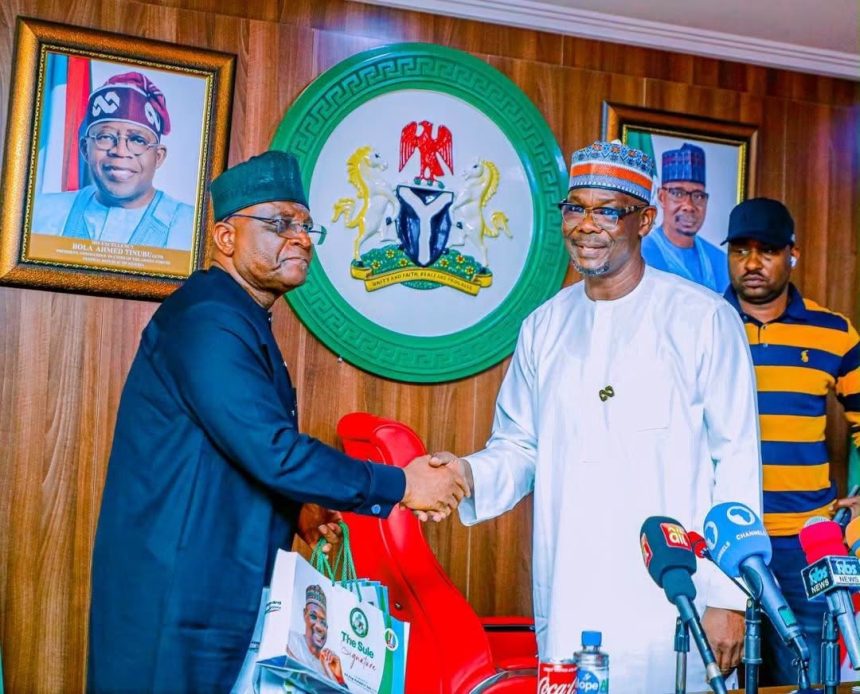
Nasarawa State Governor, Abdullahi Sule, has said the economic reforms introduced by President Bola Tinubu’s administration have increased the state’s monthly allocation from the Federation Account from about N4.5 billion to approximately N16 billion.
Mr Sule said the increase had expanded the state’s fiscal capacity and enabled his administration to undertake major infrastructure and social development projects across the state.
The governor spoke in Lafia while receiving members of the Renewed Hope Ambassadors National Media Tour, led by the Special Adviser to the President on Information and Strategy, Bayo Onanuga.
The delegation, comprising presidential media aides and more than 50 senior journalists, is touring North-Central states to inspect federal and state government projects and assess the impact of government policies and investments.

According to Mr Sule, Nasarawa previously received between N3.8 billion and N4.5 billion monthly from the Federation Account, limiting the government’s ability to execute major capital projects.
He said the situation changed following the reforms introduced by Mr Tinubu, particularly the removal of fuel subsidy.
The governor acknowledged that the reforms initially created economic difficulties for citizens but argued that they had subsequently increased resources available to the three tiers of government.
Mr Sule said the reforms had effectively created additional fiscal space for states and local governments to invest in infrastructure and improve public services.
He also praised Mr Tinubu for taking what he described as difficult but necessary decisions in the interest of the country.
According to the governor, effective communication remains important in helping citizens understand policies that may initially cause hardship but are intended to strengthen government finances and the wider economy.
He said the president had “taken the bullet” on behalf of state and local governments by implementing reforms that increased the resources available to subnational governments.
Mr Sule said the additional revenue had enabled his administration to invest in roads, industrial development, education, healthcare and water infrastructure.
He also said his administration had maintained transparency in the award and execution of contracts, noting that contract values were made public so citizens could assess how government funds were being spent.
He expressed optimism that continued implementation of the reforms would further improve the financial position of states and allow them to undertake more ambitious development projects.
During the visit, the Renewed Hope Ambassadors media team inspected several projects executed by the federal and Nasarawa State governments.
Among the projects inspected was the completed multi-billion-naira state secretariat along Shendam Road, which houses the ministries of Education, Housing and Urban Development, Health and Justice.
The team also visited a one-megawatt solar power project serving the secretariat.
Other projects inspected included the completed 16-kilometre Makurdi bypass in Lafia, which connects Nasarawa and Benue states; the Wing Commander Abdullahi Ibrahim Vocational and Skills Acquisition Centre; the Shinge Waterstorm Channel; and the completed Kilema Bridge along the Lafia-Doma road.
The tour is intended to provide journalists with an opportunity to independently observe projects being implemented under the current administration rather than relying solely on official briefings.
Mr Onanuga, who led the delegation, lauded Mr Tinubu for introducing what he described as long-delayed economic reforms.
He said successive administrations had recognised the need to address fuel subsidy and foreign exchange distortions but had been reluctant to take the necessary steps.

According to him, Mr Tinubu’s decision to remove the fuel subsidy immediately created economic pressures, while the floating of the naira and changes to the foreign exchange system also contributed to inflation and increased hardship.
Mr Onanuga, however, argued that the reforms had subsequently begun to produce positive results by freeing additional resources for state governments.
He specifically commended Governor Sule for supporting the reforms when they were initially unpopular.
Mr Onanuga recalled that Mr Sule had publicly defended the president’s decision at the time, arguing that the reforms would increase resources available to states.
Also speaking during the inspection of the Makurdi bypass, the Senior Special Assistant to the President on Media and Public Enlightenment, AbulAziz AbdulAziz, said the infrastructure projects seen across Nasarawa and Benue states demonstrated what he described as the impact of the Renewed Hope Agenda.
He said the scale of infrastructure development observed during the tour suggested that government policies were translating into tangible projects at the state and grassroots levels.