




RismadarVoice Reporters, June 28, 2026
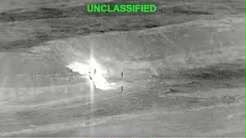
The United States has carried out another round of airstrikes against Iran, intensifying tensions just days after both countries agreed to a ceasefire aimed at ending weeks of military confrontation.
The latest escalation follows Thursday’s attack on a commercial vessel navigating the Strait of Hormuz, a strategic shipping route vital to global energy supplies.
Washington accused Tehran of violating the recently signed ceasefire agreement and responded with military action.

The U.S. Central Command (CENTCOM) announced on Saturday that it had targeted several Iranian military installations on the orders of President Donald Trump. According to the military, the strikes were directed at missile and drone storage facilities as well as coastal radar sites linked to recent attacks.
President Trump, in a post on his Truth Social platform, said the operation was launched because Iran had breached the ceasefire agreement. He warned that further violations would trigger stronger military action, adding that the United States would “complete the job” if Tehran failed to change course.
The renewed military exchange began after Iran allegedly targeted a cargo vessel passing through the Strait of Hormuz. U.S. officials said four drones were launched toward commercial ships, with one striking the Singapore-flagged cargo vessel M/V Ever Lovely. U.S. forces intercepted the remaining drones.
The shipping company confirmed that although the vessel sustained minor damage to its upper deck, no crew members were injured and the ship remained operational.
CENTCOM described the drone attack as an act of aggression against international commercial shipping, saying it undermined freedom of navigation in one of the world’s busiest maritime corridors.

Iran, however, defended its actions, claiming vessels were using routes outside those approved by Tehran. The Islamic Revolutionary Guard Corps (IRGC) warned that ships ignoring Iran’s designated navigation routes could face tougher enforcement measures.
Later on Saturday, Iranian authorities confirmed launching ballistic missiles and drones at infrastructure linked to U.S. military bases in Kuwait and Bahrain. Iranian state-affiliated media reported that the strikes targeted what Tehran described as American military assets in the Gulf.
Bahrain strongly condemned what it described as an Iranian drone attack on its territory, calling it a violation of the country’s sovereignty and a threat to regional security. The Gulf kingdom hosts the U.S. Navy’s Fifth Fleet.
The IRGC also issued a warning that American forces in the region should expect further consequences if military operations against Iran continue.
Political leaders on both sides exchanged sharp criticism following the latest developments.
Ebrahim Azizi, chairman of Iran’s parliamentary National Security Commission, accused Washington of acting in bad faith by launching attacks during ongoing diplomatic efforts. He argued that the United States had failed to honour the ceasefire agreement.
Iranian officials also claimed Washington had violated provisions of the recently signed memorandum of understanding, which called for an end to military operations across multiple conflict zones.
Former IRGC commander Mohsen Rezaei warned that any further breaches of the agreement would receive what he described as a swift and decisive response.
Meanwhile, U.S. Vice President JD Vance urged Iran to resolve disagreements through diplomacy rather than force. He cautioned that any further acts of violence would be met with a military response.
The ceasefire agreement, signed only a week ago, was intended to restore stability in the Strait of Hormuz by guaranteeing the safe passage of commercial vessels for at least 60 days.
The waterway remains one of the world’s most strategically important maritime routes, carrying a significant share of global oil exports. Since the agreement was reached, disputes have continued over navigation routes, with Iran insisting that vessels follow corridors close to its coastline, while many shipping operators have preferred alternative routes along the coasts of the United Arab Emirates and Oman.
Following Thursday’s attacks, the United Kingdom Maritime Trade Operations (UKMTO) raised the security threat level in the Strait of Hormuz to “substantial,” warning mariners of possible naval operations and the presence of sea mines.
Iran has maintained that it cannot guarantee the safety of ships that ignore its designated transit routes and warned that any future violations would prompt stronger military action.