RismadarVoice Reporters
June 18, 2026
Israeli military operations in southern Lebanon continued on Wednesday despite a framework agreement between the United States and Iran aimed at ending hostilities across multiple fronts, raising concerns about the stability of the proposed deal.
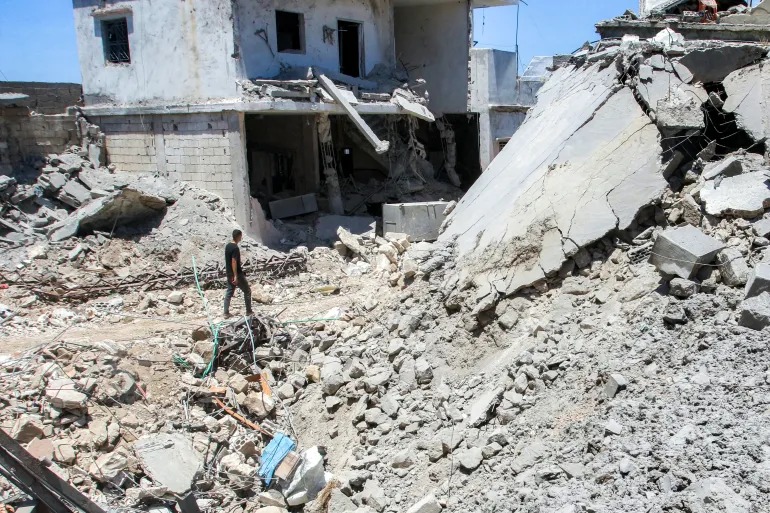
Lebanese media reports indicated that Israeli drones carried out several strikes in the Tyre area, leaving several people injured. Additional drone attacks were reported in the Bint Jbeil district of Nabatieh Governorate.
The ongoing violence is seen as one of the most significant challenges to the implementation of the US-Iran agreement, which is expected to be formally signed on Friday. Tehran has warned that continued Israeli attacks and the military presence in Lebanese territory could undermine the understanding reached between both sides.

Earlier in the day, airstrikes were reported on the outskirts of Kfar Tebnit, while raids and shelling also targeted areas around Nabatieh al-Fawqa and the Ali al-Taher heights. The attacks followed strikes on Tuesday that reportedly killed at least four people in Nabatieh.
In response, Hezbollah fighters launched rockets toward Israeli military positions near Kfar Tebnit. The Israeli military later stated that two explosive drones detonated near its forces in southern Lebanon, injuring five soldiers.
Although hostilities have declined since the announcement of the US-Iran framework agreement, security concerns remain high across southern Lebanon. Many residents returning to their communities after months of displacement have expressed fears that the ceasefire may not hold.
The United Nations reported a significant reduction in cross-border exchanges. According to UN spokesperson Stéphane Dujarric, 174 projectiles were fired between Israeli forces and Hezbollah on Sunday, compared to 705 recorded the previous week.
Analysts say developments in Lebanon have emerged as one of the most sensitive aspects of the broader US-Iran agreement. Iranian officials have repeatedly stressed that an Israeli withdrawal from Lebanese territory remains a key condition for the successful implementation of the deal.
Iranian Foreign Minister Abbas Araghchi recently described the situation in southern Lebanon as central to ongoing diplomatic efforts, while officials in Tehran have accused Israel of repeatedly violating ceasefire arrangements.

Meanwhile, diplomatic contacts between Israel and Lebanon continue independently of the US-Iran negotiations. Representatives from both countries have reportedly held several rounds of direct discussions in Washington since April and are expected to meet again later this month.
Separately, Amnesty International accused the Israeli military of carrying out large-scale forced displacement in parts of Lebanon, describing the actions as potential violations of international law. The rights group called for the immediate withdrawal of Israeli forces from Lebanese territory and urged the protection of civilian communities affected by the conflict.
Lebanese authorities estimate that more than 3,800 people have been killed, nearly 12,000 injured, and over one million displaced since the escalation of hostilities earlier this year.