RismadarVoice Reporters, May 26, 2026
Sharp disagreements erupted on Monday at the 2026 Legal Education Summit, organised by the Nigerian Bar Association (NBA), as senior lawyers and legal scholars clashed over proposals to abolish the Nigerian Law School amid concerns about declining standards in legal practice.
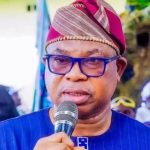
The controversy was triggered by the Vice Chancellor of Imo State University, Prof. Uchefula Chukwumaeze, SAN, who argued that the Nigerian Law School had outlived its relevance and should be scrapped.
Speaking at the summit, Chukwumaeze proposed that faculties of law in accredited universities should assume full responsibility for legal training. At the same time, le the Council of Legal Education (CLE) should be limited to regulating standards and conducting Bar examinations.

“The Council of Legal Education should abandon the idea of teaching and concentrate on setting the standards and requirements for Call to Bar,” he said.
Drawing comparisons with the United States and the United Kingdom, the senior advocate noted that universities in those jurisdictions handle legal training while professional bodies focus on accreditation and examinations.
He also recommended sweeping reforms, including the abolition of Literature-in-English as a compulsory requirement for studying law and a review of JAMB subject combinations for law admission.
Under his proposal, legal education would span seven years — five years of university studies, one year for Bar Part II and another year dedicated to an internship.
However, the Director-General of the Nigerian Law School, Dr Olugbemisola Odusote, strongly opposed the proposal, warning that scrapping the institution could weaken professional standards.
Odusote argued that some universities accredited by the National Universities Commission had not met the standards required by the Council of Legal Education to commence law programmes.
“If such universities train students for seven years and call them to the Bar, it will do the profession more disservice,” she said, describing the recommendation as “out of place.”
Also opposing the proposal, Chairman of the Council of Legal Education, Chief Emeka Ngige, SAN, insisted that legal education must remain tightly regulated to preserve professional integrity.
“What we are doing here is to reform legal education, not destroy it,” Ngige stated, faulting comparisons between the Council and examination bodies such as WAEC and JAMB.
The Chairman of the Independent National Electoral Commission (INEC), Prof. Mahmood Yakubu, represented by Mr Alhassan Umar, SAN, described the summit as timely and necessary for strengthening the quality and global competitiveness of legal education in Nigeria.
Meanwhile, NBA President, Mazi Afam Osigwe, SAN, backed calls for reforms and suggested reducing the number of years required to study law.
“The increasing number of law graduates, coupled with the inability of the Law School to admit them, may force a review of the system,” Osigwe said.

The summit also featured interventions from the Nigerian Association of Law Teachers (NALT), which called for stronger collaboration between academia and the legal profession in shaping future reforms.