


RismadarVoice Reporters
May 22, 2026
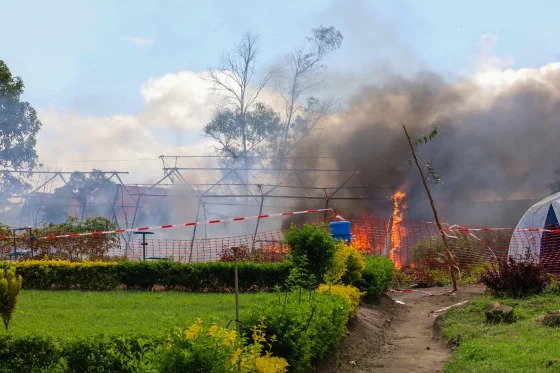
Residents in a town in eastern Democratic Republic of Congo have set fire to an Ebola treatment centre, highlighting growing fear and anger as health workers struggle to contain a rapidly spreading outbreak.
The incident occurred in Rwampara, in the Bunia area, after youths were reportedly stopped from retrieving the body of a man suspected to have died from Ebola. The confrontation escalated into violence, leading to the burning of the facility.
A witness and a senior police official said the youths became agitated after attempts to take the body for burial according to local customs were blocked under Ebola containment protocols.
Authorities said the measures were necessary to prevent further transmission, noting that bodies of Ebola victims remain highly contagious and require strict burial procedures managed by health officials.

Deputy Senior Commissioner Jean Claude Mukendi said the community did not fully understand the safety measures in place during the outbreak.
“The family, friends, and other young people wanted to take his body home for a funeral even though the instructions from the authorities are clear,” he said.
Health workers and aid agencies were forced to flee the centre as the fire spread through the facility, with some medical equipment and materials destroyed.
The World Health Organisation has since warned that the outbreak now poses a “very high” risk within the country, citing limited medical resources, insecurity, and community resistance as major challenges to containment.
WHO officials said the outbreak, driven by the Bundibugyo strain of Ebola, has so far recorded dozens of confirmed cases, with hundreds more suspected, though the true scale may be significantly higher.
The crisis is unfolding in a region already affected by armed conflict and mass displacement, complicating response efforts and limiting access to healthcare.
Aid organisations have appealed for increased support, warning that misinformation and mistrust are undermining containment strategies, particularly around burial practices and isolation protocols.

Health experts say no approved vaccine or treatment is currently available for this strain, raising concerns about the speed of response needed to prevent further spread.
Authorities and humanitarian agencies have called for calm and urged communities to cooperate with health guidelines as efforts continue to contain the outbreak.