RismadarVoice Reporters
May 19, 2026
The World Health Organisation (WHO) has raised concerns over the rapid spread of an Ebola outbreak in Central Africa after health authorities reported a sharp increase in infections and deaths linked to the disease.
According to health officials in the Democratic Republic of Congo, at least 131 people are believed to have died while 531 suspected cases have been recorded as the outbreak continues to spread across affected communities.
WHO Director-General Tedros Adhanom Ghebreyesus expressed concern over the pace of the outbreak, warning that the increasing number of infections and fatalities has become a major public health challenge.
Health experts have identified the outbreak as involving the Bundibugyo strain of Ebola, a rare variant for which no approved vaccine or specific treatment currently exists. The absence of established medical interventions, combined with limited testing capacity, has heightened fears over the potential scale of the crisis.
Authorities also noted that the disease circulated undetected for several weeks, making containment efforts more difficult. The outbreak has largely affected areas linked to mining activities where cross-border movement is common, raising concerns over wider regional transmission.

Cases have reportedly emerged in several locations, including Goma, a city in eastern Congo, as well as neighbouring Uganda.
The situation has also attracted international concern after an American missionary working in Congo tested positive for the virus. The missionary was reportedly exposed while treating patients at a hospital in northeastern Congo and later developed symptoms associated with Ebola, including fever, vomiting, muscle weakness and diarrhoea.
Another U.S. citizen infected with the virus has reportedly been transferred to Germany for treatment, according to health officials.
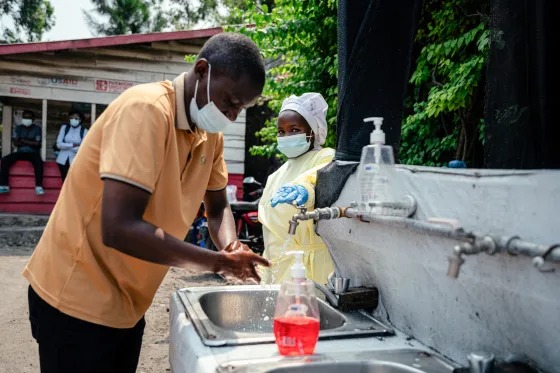
The WHO has announced plans to deploy additional medical supplies, including protective equipment and emergency response materials, to support containment efforts in affected communities.

Meanwhile, U.S. authorities have advised citizens against travelling to Congo, Uganda and South Sudan amid concerns over the outbreak.
Public health experts maintain that although Ebola can be highly deadly, the risk of widespread transmission outside affected regions remains relatively low because the disease spreads through direct contact with infected bodily fluids rather than through the air.
Health agencies continue to monitor the situation as emergency discussions and intervention measures intensify to prevent further spread of the virus.