RismadarVoice Reporters, May 18, 2026
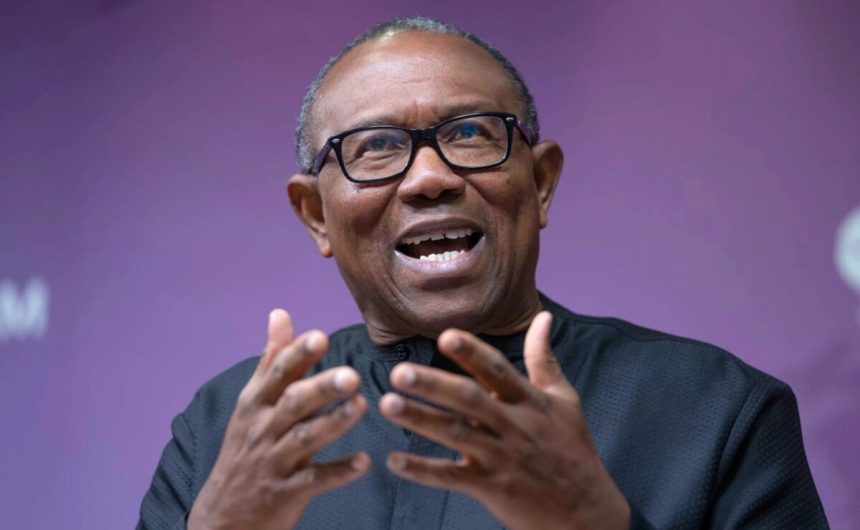
Former Labour Party presidential candidate, Peter Obi, has criticised the Federal Government over Nigeria’s growing debt profile, warning that increasing debt servicing obligations are limiting investment in key sectors of national development.
Obi expressed his concerns in a statement titled “Debt Servicing, Borrowing, and Nigeria’s Fiscal Priorities,” shared on his X account on Monday.
According to him, the Federal Government’s projected expenditure of approximately $11.6 billion on debt servicing should raise concern among Nigerians interested in the country’s economic future.

He explained that borrowing itself is not necessarily a problem if funds are managed responsibly and directed toward productive investments capable of generating long-term economic value.
The former Anambra State governor cited countries such as Japan, the United States, the United Kingdom, Singapore, Indonesia and the United Arab Emirates as examples of nations that sustain high debt levels while investing heavily in sectors like education, healthcare, infrastructure and innovation.
Obi, however, argued that Nigeria’s experience has been different, claiming that much of the country’s previous borrowing was used for consumption rather than developmental projects with lasting impact.
He also alleged that a significant portion of the debts currently being serviced accumulated under President Bola Tinubu’s administration, while borrowing activities have continued at a rapid pace.
Drawing attention to the 2026 budget, Obi noted that ₦2.46 trillion was allocated to health, ₦2.56 trillion to education and ₦865 billion to poverty alleviation, bringing the combined allocation for the three sectors to ₦5.885 trillion.
He argued that projected debt servicing costs, estimated at between ₦17 trillion and ₦18 trillion depending on exchange rates, far exceed spending on the three critical sectors combined.

According to him, the disparity highlights what he described as an imbalance in fiscal priorities.
Obi stated that rising debt obligations risk weakening investments in human capital development and poverty reduction efforts, stressing the need for a more strategic approach to borrowing and public spending.