RismadarVoice Reporters, May 8, 2026
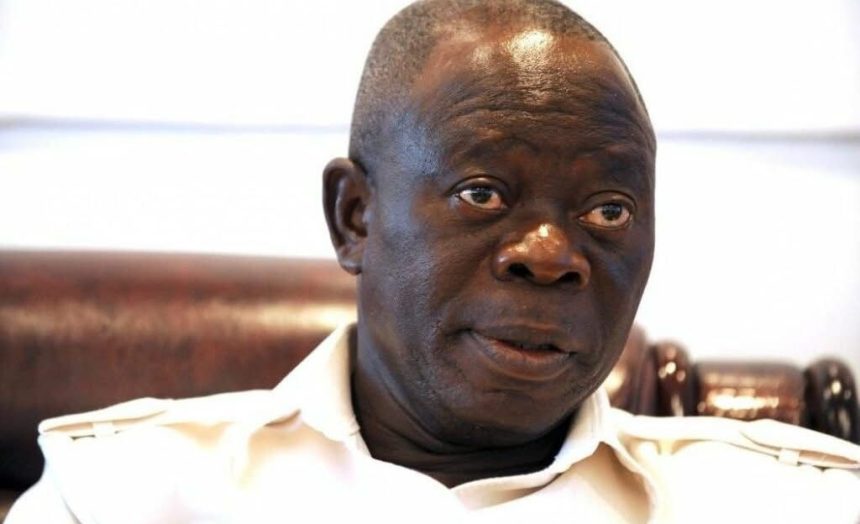
Senator Adams Oshiomhole has called on Senate President Godswill Akpabio to resign, intensifying the controversy surrounding recent amendments to the Senate Standing Orders governing the election of principal officers in the upper legislative chamber.
The senator representing Edo North made the demand on Thursday while addressing journalists in Abuja, arguing that the amended rules raise serious moral and procedural concerns within the Senate.
Oshiomhole criticised the proposed eligibility conditions for top Senate positions, insisting that Akpabio himself would not meet the standards being introduced under the new framework.

“This rule has a serious moral crisis,” Oshiomhole said, arguing that the Senate President had not completed the required years in office that the amendment seeks to impose on future aspirants.
The controversy stems from changes introduced earlier this week to the Senate Standing Orders, which initially stipulated that only senators who had served at least two consecutive and uninterrupted terms would qualify to contest for positions such as Senate President and other principal offices. Critics within the chamber argued that the amendment was rushed and designed to narrow the field ahead of future leadership contests.
Drawing comparisons with former Senate President David Mark, Oshiomhole accused the current leadership of attempting to alter rules for political convenience after benefiting from existing provisions.
He also faulted the speed with which the amendments were processed, saying lawmakers were denied sufficient opportunity for debate and scrutiny.
The dispute triggered heated exchanges within the Senate, with Senate Leader Opeyemi Bamidele insisting that any senator dissatisfied with previous decisions should follow established parliamentary procedures by filing a formal motion for reconsideration.
Amid mounting criticism, the Senate on Thursday rescinded portions of the controversial amendments to Orders 2(2) and 3(1), citing concerns that some provisions could conflict with Section 52 of the 1999 Constitution.
Bamidele explained that further legal and constitutional review revealed potential inconsistencies in the amended provisions, prompting the chamber to reverse aspects of the changes in order to preserve legislative integrity. Deputy Senate President Jibrin Barau, who presided over the session, described the move as necessary to ensure compliance with constitutional requirements.
Despite the partial reversal, Oshiomhole maintained that the process exposed deeper issues within the Senate’s leadership structure and decision-making procedures.

The Senate Standing Orders regulate legislative debates, voting procedures, and the conduct of proceedings in the Red Chamber, making any amendment to the rules a politically sensitive issue with implications for the balance of power within the National Assembly.