By Micah Jonah, March 2, 2026
Explosions were heard across Kabul on Sunday as fighting between Pakistan and Afghanistan stretched into a fourth consecutive day, raising fears of a wider regional escalation.
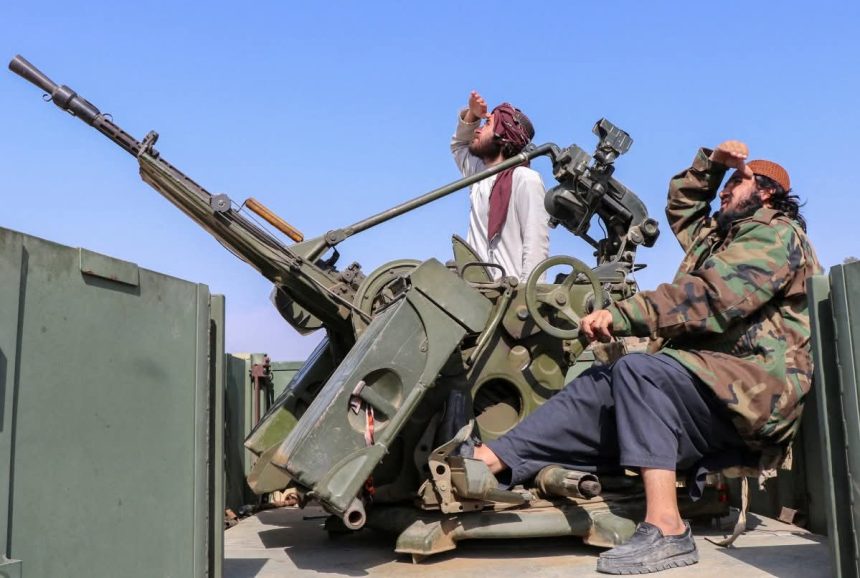
Afghanistan’s Taliban-led government said its forces activated anti-aircraft and missile defence systems after Pakistani jets entered Afghan airspace in the early hours of Sunday. Officials in Kabul claimed they thwarted an attempted strike on Bagram, the former US military base north of the capital. Pakistan has not publicly responded to the allegation.
Islamabad has declared the situation an “open war,” with Pakistani security officials saying their forces remain in control of a 32-square kilometre area of Afghan territory in the southern Zhob sector.
Afghan authorities accuse Pakistan of carrying out air and drone strikes across multiple provinces since Thursday. Deputy government spokesman Hamdullah Fitrat said 55 civilians have been killed, including a woman and child in Nangarhar province and another civilian in Paktia. Casualty figures from both sides remain independently unverified.
Tensions have escalated sharply following what Kabul described as retaliatory operations along the border after Pakistani air strikes targeted suspected Tehreek-e-Taliban Pakistan (TTP) hideouts in late February. The dispute over the TTP an armed group Islamabad accuses Kabul of harbouring has long strained relations between the two neighbours.
The United Nations previously reported credible claims that Afghan civilians were killed in earlier cross-border strikes. Kabul denies allowing its territory to be used to threaten neighbouring countries.
Militarily, Pakistan holds a significant advantage in conventional firepower, including advanced aircraft and defence systems. However, Afghan Taliban forces, shaped by two decades of insurgency against US-led NATO troops, have reportedly deployed drones in strikes against Pakistani military positions.
International calls for restraint have intensified. The United Nations, European Union, Saudi Arabia, Qatar, the United Arab Emirates, Jordan, Russia, and Iran have all urged de-escalation and dialogue.
Diplomatic observers warn that the rapidly intensifying conflict between the United States, Israel and Iran may divert global attention from the Pakistan-Afghanistan crisis.
Despite hostilities on its eastern border, Kabul on Saturday also condemned the recent attacks on Iran and called for diplomatic solutions to regional disputes.
With no sign of immediate talks and both sides hardening their positions, concerns are mounting that continued clashes could further destabilize an already fragile region.