RismadarVoice Reporters
October 4, 2026
Thousands of Zimbabweans who returned home from South Africa amid anti-immigrant hostility are struggling to rebuild their lives as unemployment, limited financial support and economic hardship complicate their reintegration.
Among them is 30-year-old Samantha Chimbuya, who moved to South Africa in 2019 in search of better economic opportunities.
Chimbuya said employment in South Africa enabled her to provide food, healthcare and improved educational opportunities for her two children. But growing hostility towards undocumented migrants eventually prompted her to return home.
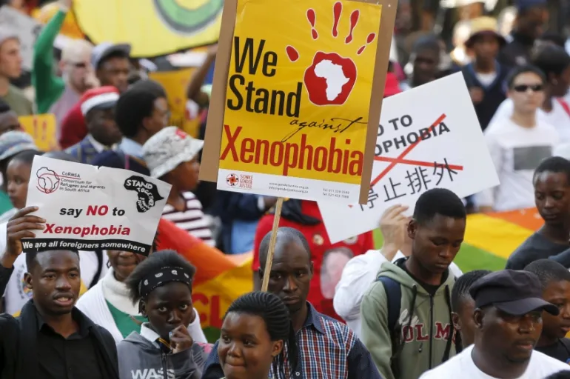
She was living in KwaZulu-Natal when anti-immigrant activism intensified ahead of a June 30 deadline announced by activists demanding that undocumented migrants leave the country.
The deadline was not issued by the South African government. Authorities rejected intimidation and violence against migrants and maintained that June 30 would be treated as a normal day.

Chimbuya, however, said fear over raids and threats convinced her that remaining in South Africa was no longer safe.
She paid for her journey back to Hurungwe in northern Zimbabwe, where she has struggled to secure employment and now relies partly on assistance from relatives and friends.
Her husband remains in South Africa and is also facing financial difficulties.
Chimbuya said she had hoped to obtain financial assistance to establish a small business but had yet to receive the support.
Zimbabwean authorities said that by July 28, about 116,670 citizens had returned from South Africa. Information Minister Zhemu Soda said 36,940 received government assistance to return, while 79,730 travelled back independently.
Another 38,057 returnees had registered for employment, according to the government.
The large-scale return has raised concerns about Zimbabwe’s capacity to reintegrate people who may have spent years building their livelihoods outside the country.
Zimbabwe Christian Alliance Executive Director Reverend Useni Sibanda said many returnees were coming home without employment, property or sufficient financial resources.
He warned that limited jobs and social support could make resettlement particularly difficult for families that had depended on income earned in South Africa.
The Zimbabwean government says measures are being developed to support returning citizens.
Local Government Minister Daniel Garwe said authorities were profiling returnees to determine their qualifications, skills and immediate needs.
According to Garwe, reintegration centres are being established, while qualified teachers among the returnees could be considered for recruitment into the education system.
Authorities are also encouraging businesses to employ skilled returnees, alongside plans for vocational training and possible assistance for people seeking to establish businesses.
RETURNEES TURN SKILLS INTO LIVELIHOODS
Some Zimbabweans have been able to use skills acquired in South Africa to establish businesses after returning home.
Sidney Bunya, from Zvimba, northeast of Harare, moved to South Africa in March 2020 because of economic difficulties.
After working in different jobs, he developed professional carpentry skills and eventually specialised in roof trusses.
Bunya said growing pressure on migrants without the required permits affected his ability to continue working in South Africa in 2026.
Before returning to Zimbabwe, he bought carpentry equipment and shipped the tools home.
Using his savings and experience, Bunya established a carpentry business that now supports his family and employs five people.

“It was difficult to set up the business. But I am getting more jobs now,” he said.
Church organisations and local businesses have also stepped in to assist some returnees through vocational training in carpentry, welding and computer-related skills, alongside temporary food, shelter and transportation assistance.
However, religious and civil society organisations say the scale of the return has stretched available resources.
Ray Motsi, president of the Theological College of Zimbabwe, called for a more comprehensive reintegration programme, arguing that helping citizens cross the border was only the beginning of the process.
Human rights activist Rashweat Mukundu similarly called for longer-term economic assistance, including support for small businesses and agriculture.
For many returnees, the central challenge remains finding a sustainable source of income after years spent building lives abroad.
Some have managed to transform skills and savings acquired in South Africa into new businesses, while others continue to search for employment or the capital needed to start again.