RismadarVoice Reporters
August 3, 2026
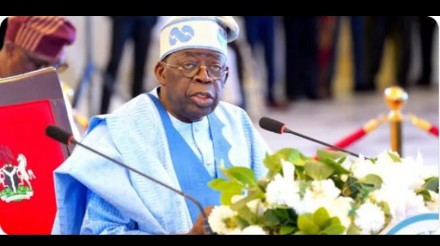
President Bola Tinubu is expected to receive the proposed National Policing Bill for review on September 3, 2026, as the Federal Government advances plans to establish a state policing framework in Nigeria.
The Presidency also announced the launch of a public portal through which Nigerians can submit memoranda and recommendations on the proposed legislation before its eventual transmission to the National Assembly.
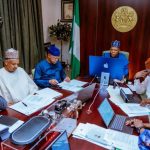
The President’s Chief of Staff and Chairman of the Presidential Working Group on the National Policing Bill, Femi Gbajabiamila, disclosed this on Monday after a meeting of the working group at the Presidential Villa, Abuja.
Gbajabiamila said the drafting process was designed as a seven-week exercise running from July 27 to September 14, with the Executive Bill scheduled to be presented to the President on September 3.

“The resulting Executive Bill package is scheduled for presentation to the President on the 3rd of September,” he said.
He explained that the public consultation would take place before the President gives final approval, after which the bill and supporting documents would be revised and prepared for transmission to the National Assembly.
Gbajabiamila described the proposed legislation as a major reform of Nigeria’s policing architecture, aimed at developing a lawful, professional and sustainable federal and state policing system.
According to him, the reform is intended to bring policing capacity closer to communities while maintaining national security standards and protecting the rights of citizens.
He, however, clarified that the constitutional process required to establish state police has not been completed.
Although both chambers of the National Assembly have approved constitutional amendments relating to state police, the amendments still require ratification by the constitutionally prescribed number of State Houses of Assembly before they can take effect.
Until that process is concluded, the Nigeria Police Force remains the only constitutionally recognised police institution in the country.
Gbajabiamila also warned against the politicisation of state police, stressing that governors and other political officeholders must not be allowed to use the proposed system to target political opponents or suppress lawful activities.
“No political officeholder should be able to direct the arrest of an opponent, the suppression of lawful political activity or the selective enforcement of the law,” he said.
He added that any federal intervention in state policing should be exceptional, evidence-based, proportionate, time-limited and subject to review.
The Presidency said the newly launched portal, nationalpolicingbill.com, would provide Nigerians with information on the reform process and enable members of the public to submit their views for about two weeks, with the possibility of an extension.

On the cost of implementing state police, Gbajabiamila said it was premature to provide an estimate, noting that the eventual cost would be determined through detailed research and an assessment of the individual needs of each state.
“There is no cost that will be too much to secure lives and property,” he said.
He explained that national policing standards would establish minimum safeguards across the country, while states with greater capacity would be allowed to exceed those requirements.
The Federal Government said the ongoing consultation is intended to ensure that the proposed policing framework is sustainable, professionally managed and responsive to Nigeria’s diverse security needs.