


RismadarVoice Reporters
October 3, 2026
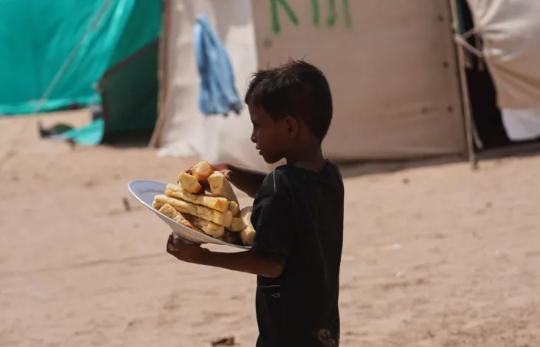
Nearly three in four households in accessible government-controlled areas of Yemen are unable to meet their basic food needs as renewed fighting drives displacement and disrupts access to food, the United Nations World Food Programme has warned.
The WFP said its latest monitoring found that 74 per cent of households in the areas surveyed were struggling to meet basic food requirements, the highest level recorded this year.
Renewed fighting has displaced more than 149,000 people, with many families forced to flee more than once. Newly displaced families have identified food among their most urgent needs.
The humanitarian agency said it had already provided emergency assistance to more than 70,000 people in two major displacement hotspots in Taiz and Lahj.
Across Yemen, an estimated 18.3 million people are facing acute food insecurity, while about 2.2 million children under the age of five are acutely malnourished.
Yemen’s heavy dependence on imported food has increased its vulnerability to disruptions in trade routes, supply chains and markets. The country imports about 90 per cent of its food.

The WFP said it was positioning supplies in key displacement areas and preparing to expand emergency assistance to as many as 1.5 million people if the conflict intensifies and forces more families from their homes.
However, the agency said it urgently requires $109 million to provide emergency food and nutrition assistance for up to 1.5 million people affected by the escalation.
It has already redirected resources originally intended for food distributions in November to meet immediate emergency needs. Without additional funding, displaced families could begin experiencing gaps in assistance within weeks.
The agency is also seeking $158 million to maintain its regular operations, including food assistance, cash support, nutrition programmes and school meals for about 2.4 million people through March 2027.
The effects of the crisis are also extending beyond Yemen. More than 3,700 people fleeing the conflict had crossed the Bab el-Mandeb Strait into Djibouti by late September, placing additional pressure on humanitarian services there.

Humanitarian officials have warned that continued fighting, displacement, restricted access and funding shortages could deepen an already severe food crisis and leave millions more vulnerable in the months ahead.