RismadarVoice Reporters
October 7, 2026
South Korea is considering a review of its military service exemption system for elite athletes following renewed controversy over how sporting achievements qualify individuals for alternatives to active military duty.
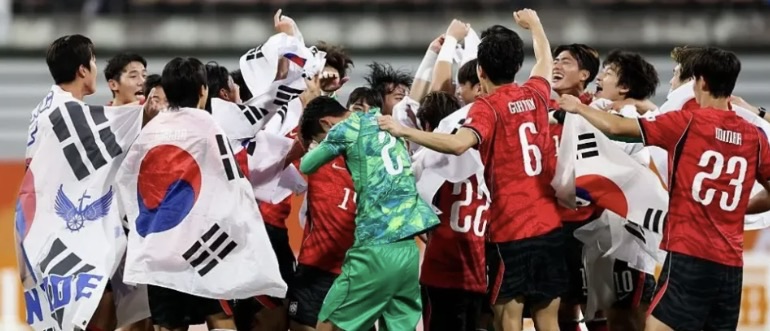
The debate intensified after South Korea’s victory over Japan in the Asian Games football final, when three members of the national team drew criticism over public celebrations linked to the military service benefits they earned by winning gold.
Captain Lee Gi-hyuk faced particular criticism after holding up his gold medal and remarking that he would not have to serve in the military. He subsequently apologised.

Culture, Sports and Tourism Minister Choi Hwi-young told the National Assembly’s Culture, Sports and Tourism Committee that the controversy had highlighted the need to reconsider a system that has operated for more than five decades.
Choi described Lee’s remarks as immature, while acknowledging that the programme had enabled outstanding athletes and artists to continue developing their careers without the lengthy interruption associated with regular military service.
He said, however, that attitudes towards fairness and compulsory service had changed, making a broader examination of the policy necessary.
Under South Korea’s current system, Olympic medallists and Asian Games gold medallists may qualify for an alternative form of military service rather than completing the standard period of active duty. Beneficiaries are still required to undergo basic military training and fulfil other obligations.
Most able-bodied South Korean men are required to perform compulsory military service, generally lasting about 18 to 21 months depending on the branch of the armed forces.
Critics have increasingly questioned whether the sporting exemption criteria fairly recognise achievements across different disciplines.
Democratic Party lawmaker Cho Kye-won argued that the existing rules could create perceptions of inequality because athletes can receive different treatment depending on the competition in which they succeed.

He noted that an Olympic bronze medal can qualify an athlete for the benefit, as can an Asian Games gold medal, while winning some major international or world championship events may not provide the same eligibility.
Cho also said 36 of the 44 athletes who received the benefit at this year’s Asian Games came from football and baseball, raising further questions about how the system distributes the privilege across sports.
The government has not announced any specific amendment or timetable for changing the rules.
Choi’s comments, however, indicate that authorities are considering a wider review of the decades-old policy as South Korea weighs support for elite sporting achievement against growing public concerns over fairness in compulsory military service.