RismadarVoice Reporters
September 23, 2026
Republican candidates across the United States are placing health care at the centre of their campaigns ahead of the 2026 midterm elections, seeking to narrow a long-standing Democratic advantage on the issue.
According to a news poll cited in the report, voters currently trust Democrats more than Republicans on health care by 22 percentage points. A New York Times/Siena College poll similarly found a 24-point Democratic advantage among likely voters.
The figures have prompted Republican candidates to intensify their focus on prescription drug prices, insurance costs and other health care concerns, according to Republican strategists cited in the report.
Republican pollster Bill McInturff said the party did not necessarily need to take the lead on the issue but needed to become more competitive.

“You don’t have to win an issue. You just have to compete on the issue,” McInturff said.
In Michigan, Republican Senate candidate Mike Rogers has campaigned on reducing prescription drug costs and called for greater price transparency from hospitals and insurers.
Rogers has also criticised Democratic rival Abdul El-Sayed’s proposal for “Medicare for All”, saying his focus would be on improving Medicare for existing beneficiaries.
In Iowa, Republican Senate candidate Ashley Hinson has run advertisements criticising major health insurance companies and saying she is working with President Donald Trump to address their practices.
Republican Rep. Tom Kean, who is seeking re-election in a competitive New Jersey district, has also highlighted health insurance costs and legislation aimed at strengthening enforcement of mental health coverage requirements.
In Kansas, Republican Sen. Roger Marshall has similarly campaigned on his record of challenging large insurance companies.
Democrats have focused their attacks on Republican-backed changes to health care spending, particularly cuts to Medicaid and the reduction of funding linked to the Affordable Care Act.

According to the report, Republicans passed about $1 trillion in Medicaid reductions as part of Trump’s major legislative package. Democrats have argued that the changes, alongside the termination of certain Affordable Care Act funding, could result in millions of Americans losing coverage or facing higher insurance costs.
House Minority Leader Hakeem Jeffries has said restoring the Medicaid and ACA funding would be a priority for Democrats if they regain control of the House.
The Republican candidates highlighted in the report have voting records connected to the measures. Hinson, Kean and Marshall voted for the Medicaid reductions, while Hinson and Marshall also voted against restoring the ACA funding.
Rogers, who left Congress in 2015, has not said whether he would support restoring the ACA funding, while his campaign did not comment on how he would vote on reversing the Medicaid cuts.
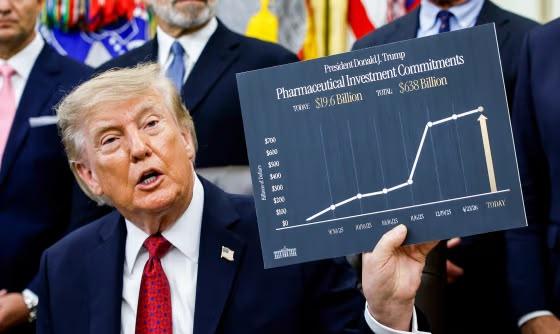
The Trump administration has also highlighted efforts to reduce prescription drug prices as part of its health care agenda.
A senior White House official said internal polling showed the administration’s work on drug prices was among its more popular second-term achievements, encouraging Republican candidates to campaign on the issue.
Trump has promoted policies aimed at lowering drug costs, including his “Most Favoured Nation” approach to pricing certain medicines under Medicaid.
However, a White House event promoting the policy received limited attention after Trump announced restrictions affecting several news organisations’ access to the White House.
Despite Republican candidates increasingly discussing health care on the campaign trail, the party has yet to establish a unified alternative to the Affordable Care Act.
Republicans spent much of the past decade, including during Trump’s first term, seeking to repeal or change the law but did not ultimately settle on a comprehensive replacement.

Sen. Mike Crapo, Republican chairman of the Senate Finance Committee, said his health care priorities would include reforms involving pharmacy benefit managers and efforts to address inefficiencies in the system.
He did not provide specific details about broader reforms.
“Our health care system is broken. I’m not going to tell you what the solutions are yet,” Crapo said.
Health care has remained an important issue in US elections for decades, with NBC News polling showing Democrats holding an advantage on the issue since the early 1990s.
The size of that advantage has varied over time, reaching more than 30 points in 2008 before narrowing to about seven points in 2010.