RismadarVoice Reporters
October 13, 2026
The National Universities Commission (NUC) has announced additional regulatory measures aimed at strengthening academic standards, admission procedures and institutional accountability across Nigerian universities.
The measures include post-accreditation monitoring, admission compliance checks, improved accreditation software and the development of a national artificial intelligence policy framework for the Nigerian University System.
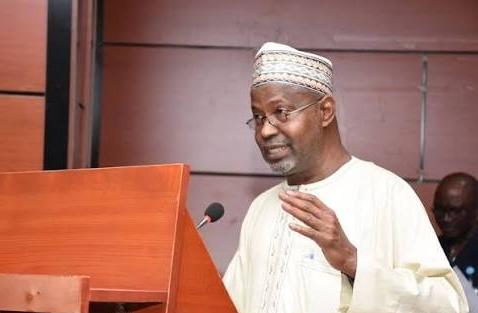
NUC Executive Secretary, Prof. Abdullahi Yusufu Ribadu, disclosed the initiatives during the opening of the 2026 NUC retreat for vice-chancellors of federal, state and private universities in Abuja.

The two-day retreat, themed “Enhancing Regulatory Compliance, Governance, Leadership, and Partnership in the Nigerian University System,” brought together university administrators and education stakeholders to examine challenges affecting higher education.
Ribadu explained that the commission had introduced post-matriculation monitoring and carrying-capacity assessments to ensure universities complied with approved admission requirements and did not enrol students beyond their authorised capacities.
He said the planned post-accreditation monitoring visits would enable the commission to determine whether institutions continued to maintain the academic and operational standards required for programme accreditation.
According to him, accreditation should not be treated as a one-time exercise, as universities must demonstrate sustained compliance with established quality requirements.
The commission is also developing accreditation software to improve transparency, strengthen data management and make quality assurance processes more efficient.
Ribadu disclosed that the NUC was preparing new guidelines governing the award and use of honorary doctorate degrees, including sanctions for institutions found violating the regulations.
He said the commission’s Policy Development Strategy Committee had completed a review of university education, resulting in Blueprint 2.0 for the Rapid Revitalisation of Nigerian University Education.
The NUC is equally developing a new strategic plan and transitioning from its Annual Performance Evaluation system to a Performance Monitoring System.

On technological development, Ribadu announced that the commission was working on a national artificial intelligence roadmap and policy framework to guide the responsible use of AI in universities.
He said emerging technologies, including artificial intelligence, digital learning platforms and data analytics, were transforming teaching, research and institutional administration.
The executive secretary disclosed that the commission had deployed the e-NUC platform to automate internal operations but emphasised that successful digital transformation would also require staff training, cybersecurity safeguards and appropriate institutional policies.
Speaking at the retreat, the Minister of State for Education, Prof. Suwaiba Said Ahmad, urged vice-chancellors to strengthen transparency, accountability and compliance with regulatory directives.
Ahmad said university administrators must demonstrate responsible leadership in financial management, procurement, recruitment, promotions, admissions and examinations.
She called for measurable institutional targets and stronger collaboration between universities and regulatory authorities to improve educational outcomes.
The minister also encouraged institutions to embrace artificial intelligence and other emerging technologies while protecting academic integrity, ethical standards and data privacy.

She stressed that resolutions reached during the retreat should translate into practical reforms, supported by mechanisms for monitoring implementation.
On research development, Ribadu said the commission was strengthening partnerships between universities, government, industry and development institutions to promote innovation and commercialisation.
He identified agriculture, healthcare, manufacturing, technology, environmental protection and the creative industry as sectors capable of benefiting from stronger university research.
The NUC boss disclosed that the commission had launched the ACE Alliance platform to improve collaboration among Nigeria’s 20 African Centres of Excellence and published a four-volume compendium of their research outputs.
He added that the Tertiary Education Research and Application Services platform had been integrated with the Nigerian Research and Education Network to support research collaboration.
The commission is also establishing a Research Commercialisation Division to strengthen intellectual property protection and facilitate the development of commercially viable products from university research.
Ribadu further announced plans for selected vice-chancellors to undertake an international study tour of universities in Europe and Asia to examine research commercialisation practices.
Addressing university funding challenges, he encouraged institutions to explore alternative financing through partnerships with private organisations, alumni associations and development agencies.
He identified the World Bank, Agence Française de Développement and African Development Bank among institutions with which the NUC had established development partnerships.

Earlier, the Chairman of the Local Organising Committee and NUC Director of Research, Innovation and Information Technology Transfer, Lawal Mohammed Faruk, said the retreat was designed to strengthen cooperation between the commission and university managements.
Faruk said discussions would focus on regulatory compliance, quality assurance, institutional governance, leadership development and strategic partnerships.
The commission maintained that the initiatives were intended to improve accountability, strengthen academic quality and enhance the competitiveness of Nigerian universities.