RismadarVoice Reporters
September 19, 2026
New legislation in California and the United States has triggered fresh legal battles over artworks taken from Jewish families during the Nazi era, with lawsuits filed against museums in Los Angeles and the Auschwitz-Birkenau Memorial.
The cases, filed in California this week, seek the return of artworks that descendants of Holocaust victims say were wrongfully taken or retained during and after World War II.
One suit was filed at the Los Angeles Superior Court by the Jewish Federation of Greater Los Angeles and its board chairman, Daniel Gryczman, against the Norton Simon Museum in Pasadena over two 16th-century paintings, “Adam and Eve,” by Lucas Cranach the Elder.
The second case was filed in a federal court in Los Angeles by the daughters of the late Dinah Gottliebova Babbitt, a Holocaust survivor and California-based animator who was imprisoned at Auschwitz.
The daughters are seeking the return of watercolour portraits Babbitt was forced to produce for Josef Mengele, the Nazi doctor notorious for conducting experiments on prisoners at the concentration camp.

Neither lawsuit stated the monetary value of the artworks.
The legal actions have brought renewed attention to the complicated question of ownership of artworks associated with Nazi persecution.
Between 1933 and 1945, the Nazi regime and its collaborators confiscated hundreds of thousands of artworks from Jewish families, collectors and institutions across Europe.
Many of the works later passed through private collections, auctions and museums, creating decades-long disputes over ownership and restitution.
The Jewish Federation of Greater Los Angeles is pursuing the Cranach paintings on behalf of Marei von Saher, the sole heir of Dutch Jewish art dealer Jacques Goudstikker.
According to the federation, Goudstikker’s collection was seized by Hermann Göring, a senior Nazi official, after the German occupation of the Netherlands.
The paintings subsequently changed hands several times before eventually being sold to the Pasadena Museum of Modern Art in the 1960s. The institution was later renamed the Norton Simon Museum.
Rabbi Noah Farkas, president and chief executive officer of the Jewish Federation of Los Angeles, said proceeds recovered from the artworks would largely be used to support Holocaust survivors in the Los Angeles area.
The federation estimates that about 2,500 Holocaust survivors live in the region.
Marei von Saher said the legal action represented an effort to seek restitution for victims of Nazi-era persecution.
The Norton Simon Museum said it intends to continue displaying the Cranach paintings and maintained that it has valid title to the works.
The museum pointed to a 2018 federal court ruling that upheld its ownership of the paintings. The U.S. Supreme Court declined to hear the case in 2019, leaving the lower court decision intact.
The museum also said the paintings had been publicly displayed at the institution for nearly five decades and had been preserved and restored during that period.
The dispute is now being revived following changes to California law.
California Assembly Bill 2867, sponsored by Assemblyman Jesse Gabriel, was signed into law by Governor Gavin Newsom in 2024. The law provides that California law applies in certain claims brought by California residents or their heirs seeking the recovery of artworks seized during the Holocaust or other acts of persecution.
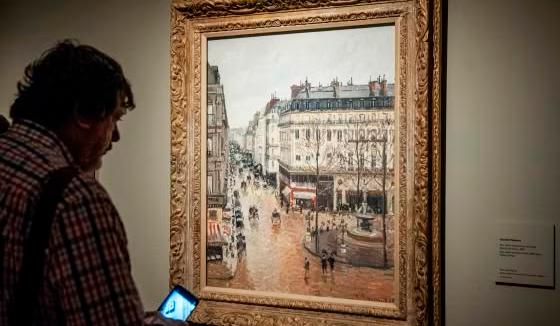
Gabriel said the legislation was prompted in part by litigation involving the Thyssen-Bornemisza National Museum in Madrid over a Camille Pissarro painting taken from the Cassirer family during the Nazi period.
He said the new legal framework should allow courts to consider the substance of restitution claims rather than resolving them solely on procedural grounds.
The Auschwitz-Birkenau Memorial, meanwhile, has defended its continued possession of the watercolours produced by Babbitt.
Pawel Sawicki, a spokesperson for the memorial, said the works are important historical records documenting Mengele’s experiments and the persecution of Roma and Sinti prisoners.
He argued that the paintings should not be treated in the same way as conventional Nazi-looted artworks because Babbitt produced them under coercion while she was a prisoner at Auschwitz.
According to Sawicki, removing the works from the memorial’s collection would result in an irreversible loss of historical documentation.

He said the institution recognised the family’s concerns but believed the paintings were among the few surviving records connected to Mengele’s experiments and should remain available as evidence of the crimes committed at Auschwitz.
The lawsuits also come after changes to U.S. federal law concerning Holocaust-era art.
According to Joel Greenberg, founder of Art Ashes, a nonprofit organisation that assists Jewish families in tracing and recovering Nazi-looted artworks, President Donald Trump signed legislation updating the Holocaust Expropriated Art Recovery Act of 2025.
Greenberg said the changes removed the previous expiration deadline for claims involving Holocaust-expropriated art and extended the period within which survivors and their heirs can pursue recovery after discovering the location of the disputed artwork.
He said the changes could reduce the importance of procedural and technical arguments in future cases and allow courts to focus more directly on competing ownership claims.