


RismadarVoice Reporters
September 28, 2026
Millions of Iranian children are returning to classrooms following months of disruption caused by the conflict involving Iran, the United States and Israel, but fears of renewed hostilities continue to weigh on students, parents and teachers.
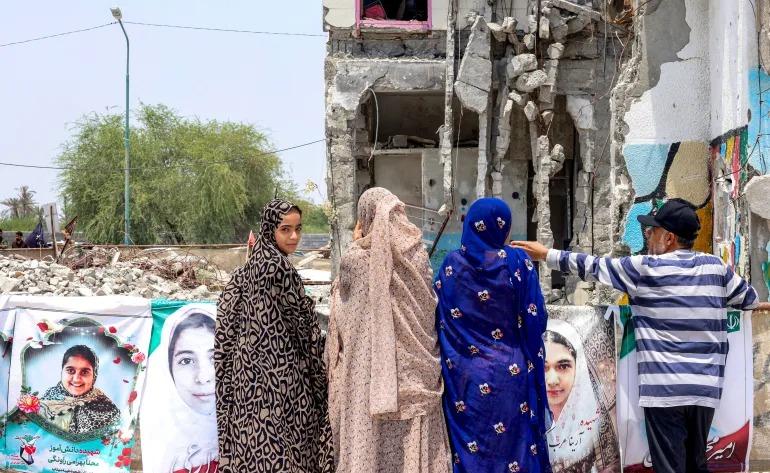
In Minab, southern Iran, the Shajareh-ye Tayyebeh Elementary School remains one of the most painful reminders of the conflict.
The school was struck on February 28, the opening day of the war, killing more than 150 people, including about 120 children, according to Iranian authorities and subsequent investigations.

A United Nations fact-finding mission said this month that there were reasonable grounds to believe the United States was responsible for the strike and that the attack may have constituted a violation of international humanitarian law.
The original school site has since become a memorial, while educational facilities have been rebuilt to enable children in the area to continue their schooling.
Across Iran, the outbreak of hostilities forced widespread disruption to education, with many students relying on remote learning.
Physical classes have now resumed in many parts of the country as the new academic year begins, although some southern areas are initially maintaining online education because of continuing security concerns.
For many parents, however, sending their children back to school has brought renewed anxiety.
Meysam, a father in Tehran, said he remained concerned about how quickly he could reach his 11-year-old child if hostilities resumed and parents were suddenly required to collect their children.
Another father, Hossein, said memories of attacks on educational facilities remained with him as he took his first-grade child to school.
Families in Minab have faced particularly difficult circumstances following the February attack.
Faramarz, a 39-year-old teacher, said he lost his wife and one of his children in the attack, leaving his family struggling with the consequences months later.
Iranian education authorities say the conflict caused extensive damage to the country’s educational infrastructure.
Officials have reported that 1,288 schools were affected by the fighting, including a smaller number that sustained direct strikes and required extensive reconstruction.
Repairs have since been undertaken at many affected schools as authorities work to restore normal education.
The government has also strengthened remote-learning systems in preparation for possible future disruptions if hostilities resume.
Educators, however, have expressed concern about the academic and social consequences of prolonged online learning.
Amir, a secondary school teacher in Tehran, said several months of the previous academic year were conducted remotely, making it more difficult for teachers and students to establish consistent classroom relationships and routines.
Teachers are now being encouraged to increase group activities and other forms of classroom interaction as students return to physical learning.
Another elementary school teacher, Zeinab, said maintaining children’s concentration could become difficult whenever military activity was heard nearby.

She also warned that another extended period of online education could disproportionately affect children without reliable internet access or suitable technology at home.
For survivors of the Minab school attack, the beginning of the academic year has also brought memories of classmates who will not be returning.
One student from Shajareh-ye Tayyebeh said the absence of friends who once lived near his home remained particularly difficult.
As classrooms reopen across Iran, education authorities are attempting to restore normal academic life while families continue to live with uncertainty over whether the conflict could intensify again.