RismadarVoice Reporters
November 12, 2026
The Federal Government has called for increased private sector investment in Nigeria’s electricity industry, with officials reporting that more than ₦10 trillion has been invested in the sector since privatisation without resolving its longstanding infrastructure and financing challenges.
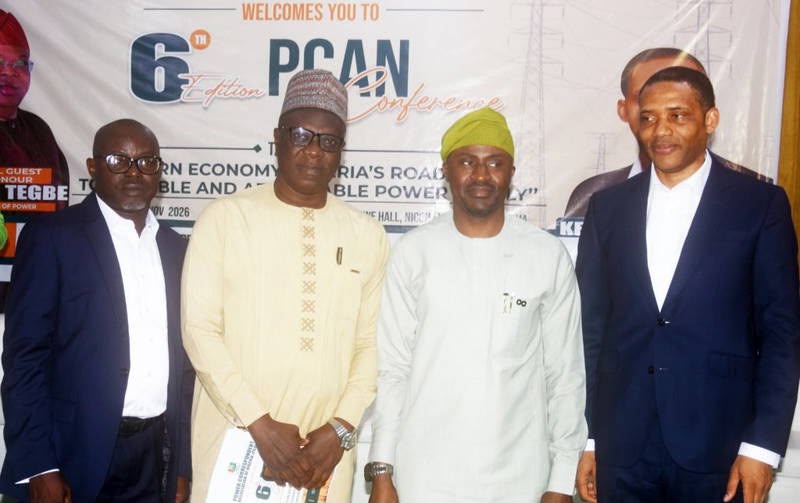
The Managing Director of FGN Power Company Limited, Kenny Anuwe, disclosed this on Thursday at the sixth annual conference of the Power Correspondents Association of Nigeria in Abuja.
Speaking on the theme, “$1 Trillion Economy: Nigeria’s Roadmap to Reliable and Affordable Power Supply,” Anuwe said government funding alone could not meet the industry’s growing investment requirements.
He claimed that public funding accounted for more than 95 per cent of new infrastructure investment, describing the situation as unsustainable.

Anuwe called for regulatory certainty, bankable projects, simplified institutional arrangements and faster decision-making to attract private capital.
He disclosed plans for a $2.3 billion investment programme involving $1.3 billion from Europe and $1 billion from China.
According to him, FGN Power is also pursuing additional financing arrangements, including blended finance and potential partnerships with development finance institutions.
On infrastructure development, Anuwe said the Presidential Power Initiative had completed its pilot phase and commenced work on transmission substations and lines.
He projected that ongoing interventions could add 5,540 megawatts to the national grid by 2029 and improve electricity reliability.
The projections remain targets rather than completed capacity additions.
Meanwhile, the Minister of Power, Joseph Tegbe, announced that the Federal Government had approved a ₦3.3 trillion intervention to settle verified legacy debts owed to electricity generation companies.
Represented by his Special Adviser on Administration and Projects, Martins Olajide, the minister said ₦1.23 trillion had already been raised under the arrangement.

He explained that settling the debts would improve generation companies’ ability to pay gas suppliers and maintain their facilities.
Tegbe also reported that more than 2.8 million electricity customers had been metered under the Presidential Metering Initiative.
Earlier, PCAN Chairman Obas Esiedesa identified inadequate transmission infrastructure, liquidity constraints, regulatory uncertainty and seasonal generation declines as major obstacles to reliable electricity supply.
He urged stronger coordination among electricity producers, regulators, investors and government agencies.
The conference highlighted the importance of sustainable financing, infrastructure expansion and regulatory reforms in supporting Nigeria’s ambition of developing a $1 trillion economy.
However, achieving the proposed improvements will depend on financing, project execution and the industry’s ability to address persistent operational challenges.