RismadarVoice Reporters, April 14, 2026
The Federal Government has reaffirmed its commitment to advancing sustainable and climate-responsive initiatives as central pillars for the growth of Nigeria’s marine and blue economy sector.
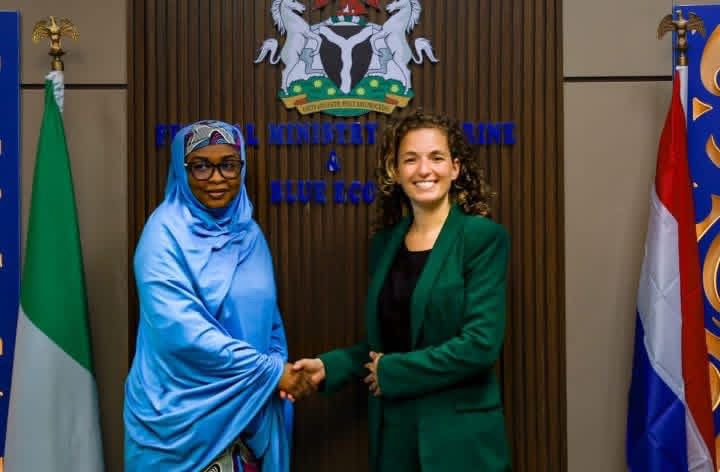
The Permanent Secretary of the Federal Ministry of Marine and Blue Economy, Fatima Sugra Mahmood, made this known in Abuja while receiving a delegation from Invest International, a Dutch state-owned development finance institution under the Ministry of Finance led by Fenna Zoe Howkamp.
According to a statement issued by the Ministry’s Director of Information and Public Relations, Anastasia Ogbonna, Mahmood said the Ministry is increasingly embedding climate considerations into its policies and programmes. She noted that priority areas include reducing carbon emissions, safeguarding marine ecosystems, and ensuring the sustainable use of ocean and water resources.
Mahmood also reiterated the Ministry’s readiness to engage in strategic partnerships, particularly in the development of port services and marine infrastructure, which she described as critical to attracting long-term investments needed for sustainable sectoral growth. She further assured international partners of Nigeria’s openness to collaboration that fosters innovation, investment, and environmental sustainability within the blue economy.
On her part, Fenna Zoe Howkamp reaffirmed the Netherlands’ commitment to strengthening cooperation with Nigeria’s Ministry of Marine and Blue Economy. She highlighted Invest International’s technical expertise in marine and water management and presented proposed areas of collaboration, including coastal protection projects supported by feasibility studies, as well as nature-based solutions for drainage and water supply systems.
Howkamp emphasized the shared goal of developing resilient infrastructure within the blue economy framework. She also outlined potential financing options available through Invest International, which include up to 35 percent funding support for public infrastructure projects valued between €100 million and €150 million.
These projects, she noted, could be structured through co-financing arrangements with institutions such as the World Bank and the European Investment Bank, or through direct lending to the Ministry.