RismadarVoice Reporters
November 11, 2026
The Nigerian Senate has passed a bill seeking to increase government funding for Federal Unity Colleges and Armed Forces senior secondary schools across the country.
The bill, which seeks to amend the National Senior Secondary Education Commission Act, is aimed at addressing infrastructure deficits, inadequate learning facilities and other challenges affecting public senior secondary education.
The legislation was passed on Wednesday following the consideration of a report by the Senate Committee on Education (Basic and Secondary).
Senator Orji Uzor Kalu presented the committee’s report on behalf of its chairman, Senator Usman Adamu.
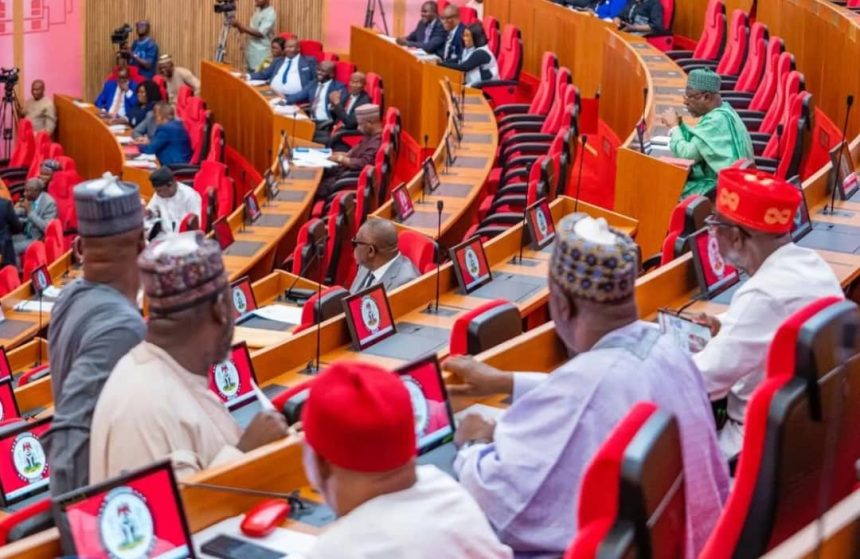
Deputy Senate President Barau Jibrin, who presided over the plenary, announced the passage after lawmakers adopted the proposed amendments through a voice vote.
The executive bill, sponsored by Senate Leader Opeyemi Bamidele, had earlier passed second reading in October before being referred to the committee for further legislative consideration.
Under the proposed amendments, Federal Unity Colleges and Armed Forces senior secondary schools would benefit from direct government intervention to improve infrastructure, instructional materials and other essential educational facilities.

The bill also seeks to strengthen coordination between the National Senior Secondary Education Commission and relevant government authorities to ensure effective administration of the intervention funds.
Another provision amends Section 23(1)(b) of the existing law concerning the composition of state education boards.
It proposes that each state should have three representatives, one from each senatorial district, with at least one representative being a woman.
Presenting the committee’s findings, Kalu explained that stakeholders, including representatives of the Federal Ministry of Education and teachers’ unions, participated in a public hearing on the proposed legislation.
He said their submissions were reviewed before the committee recommended the bill’s passage.
The legislative development comes amid persistent concerns over inadequate funding, deteriorating infrastructure and shortages of instructional materials in public secondary schools.
In June 2025, the National Senior Secondary Education Commission disclosed that insufficient funding had limited its ability to implement programmes aimed at improving educational facilities and teaching standards.

The commission also raised concerns about the non-release of statutory funding provided under the 2023 Act.
The Senate’s latest action is intended to strengthen financial support for public secondary education and improve learning conditions nationwide.
However, passage by the Senate does not automatically make the amendment law. The bill must complete the remaining constitutional legislative processes, including presidential assent, before its provisions can take effect.