RismadarVoice Reporters
November 11, 2026
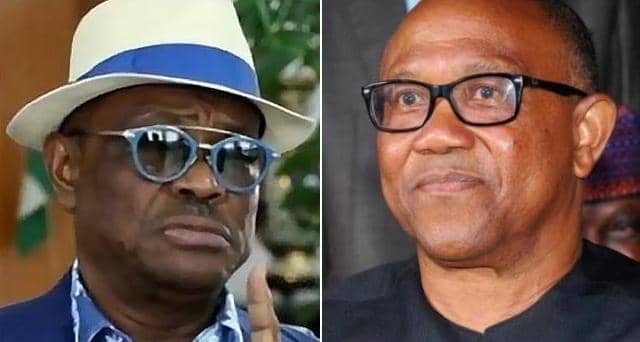
The Minister of the Federal Capital Territory, Nyesom Wike, has renewed his criticism of former Anambra State Governor Peter Obi, questioning his ability to govern Nigeria and accusing him of abandoning political parties whenever they encounter internal difficulties.
Wike, who has repeatedly challenged Obi’s presidential ambition ahead of the 2027 general election, argued that managing a country requires political courage, consistency and the ability to resolve complex problems.
Speaking during a stakeholders’ meeting in Bonny Local Government Area of Rivers State on October 24, the minister described Obi as a politician whose popularity on social media did not necessarily demonstrate the capacity to lead Nigeria.
He argued that Obi’s movement between political parties raised questions about his willingness to confront internal disagreements and remain committed to political organisations during difficult periods.

Wike cited Obi’s departure from the Peoples Democratic Party (PDP), his subsequent presidential candidacy under the Labour Party (LP), and his later association with the African Democratic Congress (ADC) before joining the Nigeria Democratic Congress (NDC).
The former Rivers State governor maintained that leadership should be measured by the ability to manage challenges rather than withdrawing when disagreements arise.
He contrasted Obi’s political decisions with his own continued membership of the PDP despite the party’s prolonged internal disputes.
Wike also questioned Obi’s record as governor of Anambra State, arguing that Nigerians should assess the former governor’s administrative achievements when considering his presidential ambition.
The minister repeated similar criticisms during subsequent political engagements, including a November 5 media chat in Port Harcourt, where he questioned Obi’s political influence and leadership credentials.
At a Rainbow Coalition stakeholders’ meeting in Abaji, Abuja, on November 10, Wike again challenged Obi’s capacity to confront Nigeria’s economic, security and governance problems.

He argued that the presidency required difficult decisions, political resilience and accountability.
However, Wike’s assessment remains a political opinion rather than an independently established conclusion about Obi’s ability to govern.
Obi, who contested the 2023 presidential election under the Labour Party, is seeking the presidency on the NDC platform in 2027.
His political movement has attracted both support and criticism, with supporters emphasising his governance record and proposals for economic reform.
The exchanges reflect continuing disagreements among political figures over leadership, party loyalty and governance as preparations intensify for the 2027 general election.