RismadarVoice Reporters
October 23, 2026
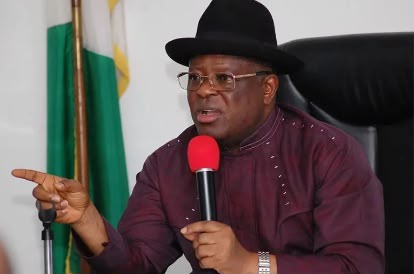
The Minister of Works, David Umahi, has dismissed suggestions that former Anambra State Governor Peter Obi is the South-East’s strongest presidential candidate, insisting that the region has other qualified political figures capable of contesting Nigeria’s presidency.
Umahi made the remarks during an interview with ARISE News on Friday while defending South-East political leaders who support President Bola Tinubu’s re-election bid ahead of the 2027 general election.
The former Ebonyi State governor argued that Obi should not be regarded as the region’s only credible presidential option because of his performance in the 2023 election.

He also criticised Obi’s approach to his previous presidential ambition, alleging that the former governor failed to adequately consult influential political stakeholders in the South-East.
According to Umahi, anyone seeking to represent the region in a presidential contest should engage governors, political leaders and other stakeholders to build consensus.
He maintained that consultations were particularly important when a candidate’s ambition was being presented as part of a wider regional aspiration.
Umahi further argued that the South-East’s political future should not be tied exclusively to one individual or state.
Referring to Nigeria’s first President, Nnamdi Azikiwe, who came from present-day Anambra State, he said other South-East states should also have opportunities to produce national leaders.
He identified Ebonyi, Enugu, Abia and Imo as states whose political figures should be considered alongside those from Anambra.
The minister also rejected accusations that South-East politicians supporting Tinubu were betraying the region’s interests.
He maintained that political leaders were entitled to make independent decisions about alliances and presidential endorsements.

Umahi emphasised the importance of building relationships with other geopolitical zones, arguing that regional support alone would be insufficient to secure the presidency.
His latest remarks follow earlier disagreements with Obi and his supporters over political leadership, governance records and the South-East’s presidential ambitions.
In September, Umahi publicly challenged comparisons between himself and Obi, questioning claims that the former Anambra governor had a superior record of public service.
Obi, who contested the 2023 presidential election on the Labour Party platform, secured substantial support across the South-East and other parts of Nigeria.
The exchange reflects continuing disagreements among political leaders in the region over presidential representation, political alliances and support for Tinubu ahead of the 2027 election.