



RismadarVoice Reporters
October 19, 2026
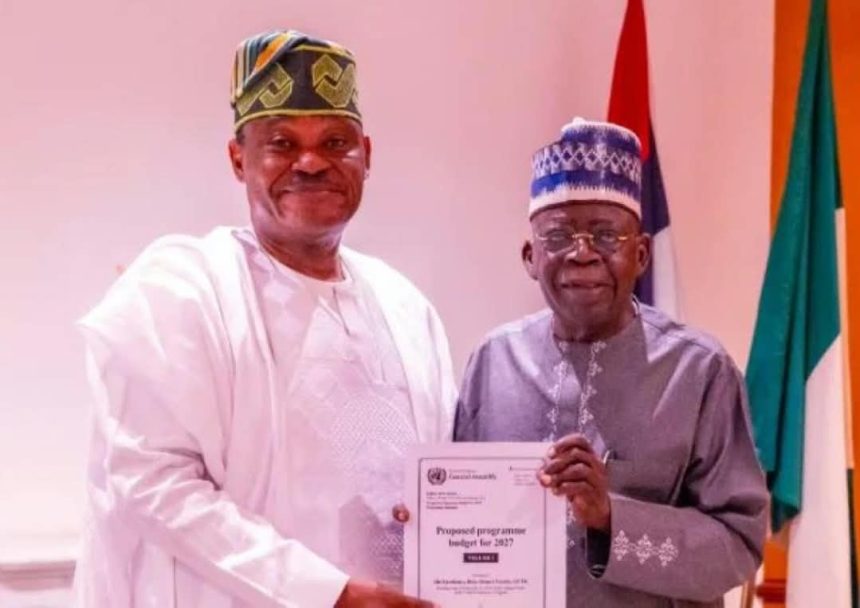
President Bola Ahmed Tinubu has received the proposed 2027 United Nations budget from Nigeria’s Permanent Representative to the global organisation, Ambassador Jimoh Ibrahim, in what the envoy described as a historic milestone for Nigeria.
The seven-volume budget document was presented to the President at the State House, Abuja, on Sunday, October 18, 2026.
Ibrahim, who chairs the United Nations General Assembly’s Fifth Committee on Administrative and Budgetary Matters, said the presentation reflected Nigeria’s growing participation in international financial and administrative decision-making.
According to the envoy, Tinubu became the first Nigerian president to receive the proposed UN budget through this process since Nigeria joined the organisation in 1960.
He explained that the document had earlier been submitted by United Nations Secretary-General António Guterres to the committee responsible for reviewing the organisation’s financial proposals.
Ibrahim described Nigeria’s chairmanship of the committee as a significant achievement, noting that the country had not occupied the position in 66 years.

The proposed budget covers the United Nations’ regular operations, peacekeeping activities and other financial commitments intended to support international peace, security and development.
Providing details, Ibrahim said approximately $3.4 billion was proposed for regular operations, while about $8.5 billion was earmarked for peacekeeping activities.
He described the broader financial proposal as approximately $14 billion, although the two figures he separately identified total $11.9 billion.
The ambassador emphasised that the budget had not received final approval and would undergo further negotiations, adjustments and consideration by UN member states.
He also declined to specify what financial or developmental benefits Nigeria might receive, explaining that discussions were still ongoing.
The presentation comes as the United Nations considers spending priorities and administrative reforms aimed at improving efficiency and strengthening its ability to respond to global challenges.

Nigeria’s leadership of the Fifth Committee places its representative in a prominent position during deliberations on the organisation’s financial and administrative affairs.
However, the presentation does not mean Nigeria controls the UN budget or that the proposed funds have been allocated to the country.
Final budgetary decisions remain subject to the United Nations’ established approval procedures.