RismadarVoice Reporters
October 8, 2026
Three years after the October 7, 2023 attacks and the wars that followed, the Middle East has undergone a major shift in its military balance, alliances and security architecture.
Iran’s regional network has suffered significant setbacks, particularly through the weakening of Hamas and Hezbollah during sustained Israeli military operations. The Houthis in Yemen, however, remain a formidable force, with their activities continuing to affect security around critical regional waterways.
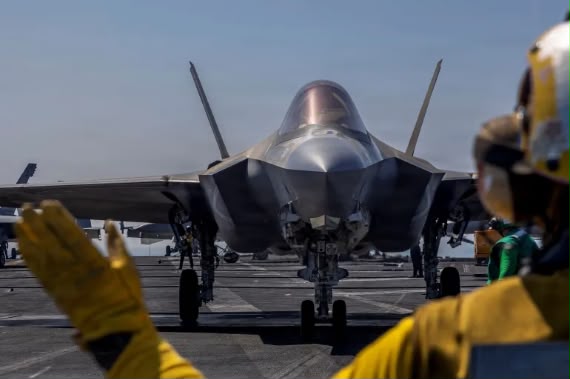
Israel has meanwhile demonstrated an expanded ability to conduct military operations beyond Gaza, including actions involving Lebanon, Syria and Iran. Its increased military reach has strengthened its position as a major regional military power, even as the conflicts have intensified international criticism of Israeli policy.

The upheaval has also accelerated a broader reassessment of regional security arrangements.
For decades, the United States has played a central role in the Gulf’s security architecture. But the wars and crises that followed October 7 have encouraged several regional governments to diversify their security and diplomatic partnerships rather than depend predominantly on Washington.
One of the clearest examples came in August, when Saudi Arabia, Türkiye and Pakistan signed the Mecca Joint Defence Agreement, establishing a collective defence framework under which aggression against one of the three countries is treated as aggression against all.
The agreement has since taken on greater significance amid renewed fighting involving Saudi Arabia and Yemen’s Houthis. Türkiye has begun providing primarily technical and defensive assistance to Saudi Arabia, including military equipment, intelligence and air-defence support.

The development reflects an increasingly complex regional order in which Middle Eastern powers are building relationships with multiple global and regional partners rather than relying on a single security bloc.
Türkiye has expanded its strategic role, while China continues to pursue economic and diplomatic influence across the region. Pakistan has also become more prominent in Gulf security calculations.
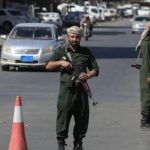
At the same time, the weakening of some Iran-aligned groups has not eliminated Tehran’s influence. The Houthis remain capable of challenging Saudi interests and disrupting activity around the Bab al-Mandeb, one of the world’s most important maritime routes.
The conflicts have also placed major pressure on regional economies.
Disruption around the Strait of Hormuz has affected oil exports, shipping and business confidence across the Gulf. The International Monetary Fund said in July that Saudi Arabia’s economy had shown resilience but projected growth to slow to 1.7 per cent in 2026 as the conflict disrupted trade and economic activity.
Earlier IMF projections also showed the scale of the economic shock facing some Gulf states, including a sharp deterioration in Qatar’s 2026 outlook following disruptions associated with the regional conflict.
The Strait of Hormuz and Bab al-Mandeb have therefore become not only military flashpoints but critical economic pressure points affecting energy exports and international trade.

Three years after October 7, the result is a Middle East whose power structure is considerably different from that of 2023.
Israel has demonstrated greater military reach, Iran’s regional network has been weakened but not dismantled, the Houthis remain influential, and Gulf states are increasingly pursuing additional security partnerships.
Rather than producing a single dominant regional order, the conflicts have accelerated the emergence of a more fragmented and multi-aligned Middle East in which military power, economic resilience and competing alliances are increasingly shaping the region’s future.