RismadarVoice Reporters
September 21, 2026
Global oil prices fell to their lowest levels in more than a week on Monday as investors weighed prospects for renewed diplomatic efforts to de-escalate the United States-Iran conflict against continuing security threats across the Middle East.
Brent crude futures dropped $2.16, or 2.08 per cent, to $101.71 per barrel in early trading, while United States West Texas Intermediate crude declined $2.15, or 2.14 per cent, to $98.15 per barrel.
Both benchmarks touched their lowest levels since September 10, with WTI falling below the psychologically significant $100-per-barrel mark.
The decline followed losses in the previous trading session, when Brent settled 0.91 per cent lower, and WTI dropped 1.58 per cent.
Market participants attributed part of Monday’s decline to expectations that diplomatic activity surrounding the United Nations General Assembly in New York could reduce tensions between Washington and Tehran.
United States President Donald Trump has said he would be open to meeting Iranian President Masoud Pezeshkian, who is expected to attend the General Assembly this week.

Iran has also reportedly communicated conditions through mediators for a potential return to negotiations aimed at ending the conflict.
Tim Waterer, chief market analyst at KCM Trade, said some of the geopolitical risk premium previously built into crude prices appeared to be easing as traders considered the possibility of diplomacy.
“It seems that a degree of risk premium is being removed from oil prices on hopes that a diplomatic path to de-escalate the US-Iran war may arrive this week,” Waterer said.
“Whether that hope proves to be warranted or not is another question. Time will tell.”
MIDDLE EAST TENSIONS REMAIN HIGH
Despite the decline in prices, security risks surrounding global energy supplies remain significant.
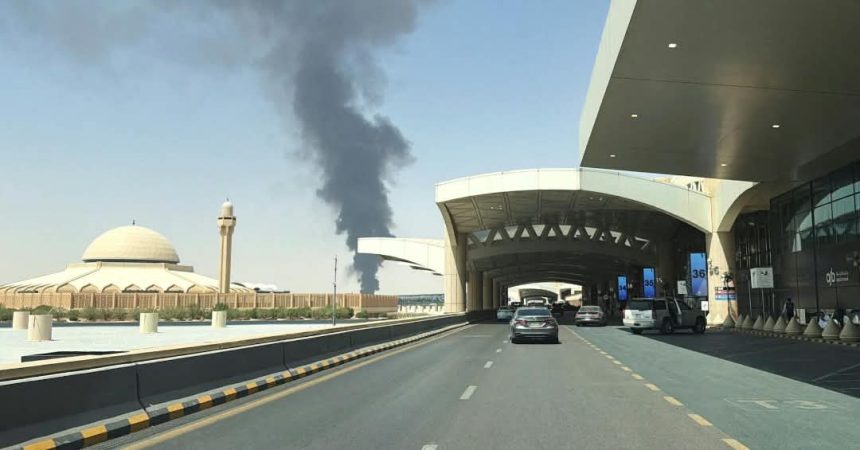
Yemen’s Houthis said they carried out missile and drone attacks against what they described as sensitive locations in Riyadh on Saturday and also targeted an Aramco facility in the Red Sea city of Yanbu, an important Saudi oil export hub.
The claims came amid a series of attacks affecting Saudi energy infrastructure, including the kingdom’s East-West pipeline.
China has also reportedly urged Iran to help restrain the Houthis following an appeal from Saudi Arabia, as concerns grow over the potential impact of further attacks on regional energy infrastructure.
SAUDI OIL EXPORTS BEGIN TO RECOVER
Saudi Arabia has responded to disruptions along its western export route by increasing shipments through the Strait of Hormuz.
Provisional market data showed Saudi exports recovering to more than four million barrels per day so far in September after falling to about 2.4 million barrels per day in August, their lowest level in more than a decade.
Satellite data also indicated that Saudi crude shipments through the Strait of Hormuz averaged about 2.9 million barrels per day over a recent six-day period, compared with approximately 700,000 barrels per day in August.
The recovery in Saudi shipments has helped ease immediate concerns about severe supply shortages despite continuing attacks on energy infrastructure.
Analysts at JPMorgan said Middle Eastern oil flows had remained stronger than might have been expect do given the disruption.

Total regional oil flows averaged about 17.1 million barrels per day over a recent 10-day period, although that remained around 6.1 million barrels per day below the 2025 average.
The combination of recovering Saudi exports and renewed expectations of diplomatic engagement has therefore reduced some of the immediate pressure that pushed crude prices higher during the conflict.
However, the outlook remains highly sensitive to developments between the United States and Iran, attacks on Saudi energy infrastructure and the security of major shipping routes.
Any progress towards negotiations could further reduce the geopolitical premium embedded in oil prices, while renewed escalation or disruption to regional exports could quickly reverse Monday’s decline.