RismadarVoice Reporters, August 30, 2026
The death toll from devastating floods and landslides near the Nepal-China border has risen to at least 734, while more than 3,000 people remain missing as rescue teams continue operations in affected areas.
The disaster, triggered by a glacier collapse in the Himalayas near the border with China’s Tibet region, caused severe flooding along the Trishuli and Bhotekoshi river systems, destroying communities, roads and infrastructure.
Authorities in Nepal and Tibet said rescue efforts are ongoing to locate missing residents and workers, including more than 900 employees believed to be unaccounted for at hydropower project sites in central Nepal.

According to Nepal’s Independent Power Producers’ Association, about 933 workers from 11 hydropower project sites and tunnels in the Rasuwa and Nuwakot districts are missing. The workers include citizens from Nepal, India, South Korea and China.
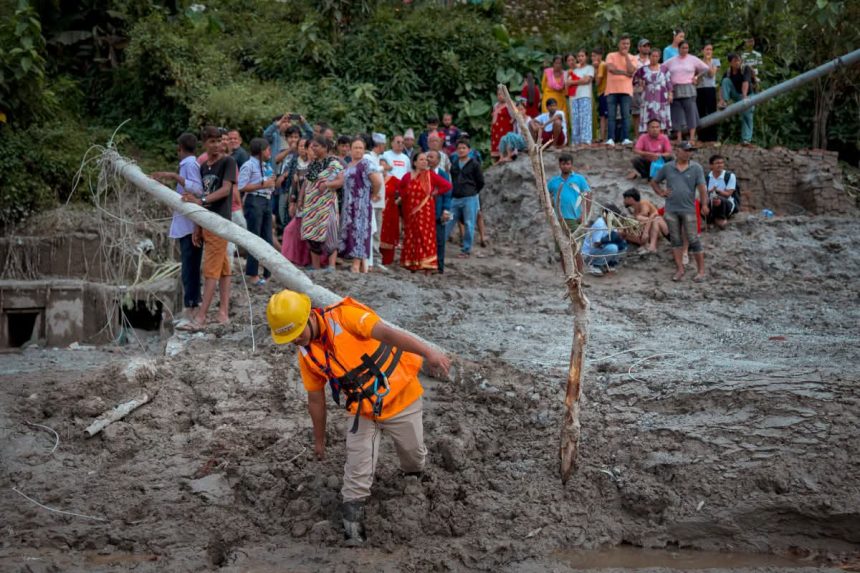
Nepal’s government said rescue teams have been deployed to clear debris and reach people trapped in tunnels. A joint team of 82 personnel from the Nepali Army, Armed Police Force Nepal and Nepal Police has been involved in the search operations.
At the Upper Trishuli-1 hydropower project, the Nepali Army has rescued 254 workers, while rescue efforts at other locations remain difficult due to mud-filled tunnels and damaged access routes.
The flooding has also created challenges in identifying and preserving victims’ bodies, with local authorities reporting that some bodies have been carried downstream and morgues are struggling with limited storage capacity.
Nepal’s National Disaster Risk Reduction and Management Authority confirmed the death toll had reached 734, while officials said thousands of people remain missing across affected regions.
In China’s Tibet region, authorities reported 16 deaths in Gyirong County, with hundreds of rescue workers deployed to search affected areas. Chinese authorities said they are using satellites, drones and monitoring equipment to assess risks from a newly formed barrier lake created by flood debris.
Nepal has mobilised 19,000 security personnel and 16 helicopters for rescue operations, while international assistance has arrived from the United Nations, Red Cross Federation, Australia, India, South Korea and the United States.

China has also deployed 2,100 rescue workers and allocated 220 million yuan, approximately $32.7 million, for relief efforts, according to Chinese state media.
Rescue operations continue as authorities work to recover missing persons, provide humanitarian assistance and restore access to communities affected by one of the region’s worst recent flood disasters.